

Safe storage of cleaning chemicals at work, from location to bleach
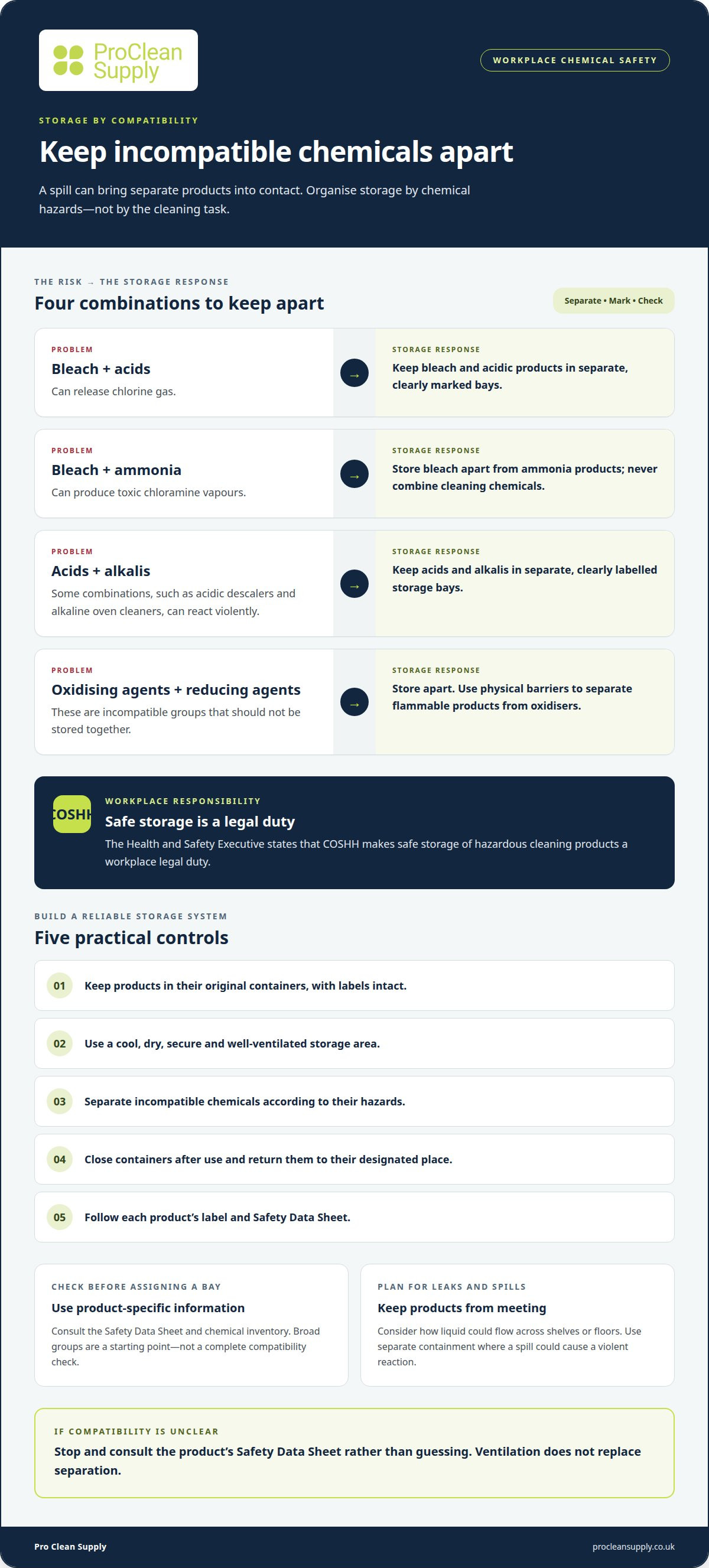
Bleach is safest when stored apart from acids and ammonia, not simply placed on a shelf with other cleaners. A safe storage of cleaning chemicals guide starts with five practical controls: keep products in their original, labelled containers; store them in a cool, dry, ventilated and secure area; separate incompatible chemicals; close containers after use; and follow each product’s safety instructions. Bleach mixed with acids can release chlorine gas, while bleach and ammonia can produce toxic chloramine vapours.
Workplace storage is also a safety responsibility. The Health and Safety Executive states that COSHH makes safe storage of hazardous cleaning products a legal duty in the workplace. Clear arrangements help staff find products, prevent accidental mixing and respond more effectively to spills.
This guide covers workplace health and safety basics, where to store cleaning chemicals, how to separate acids, alkalis and other incompatible products, and the specific precautions for bleach and chlorine. Use it to review your storage area and make everyday rules clear to everyone who handles cleaning products.
Key Takeaways
- Use product labels and Safety Data Sheets to shape storage and handling procedures for each chemical.
- Choose a dedicated storage area that limits access and keeps products away from heat, sunlight and busy workspaces.
- Organise separate, clearly marked storage for incompatible products, guided by their hazards rather than their cleaning task.
- Give bleach and chlorine products particular care: their separation from other chemicals is essential to safe storage.
1. What are the basic WHS requirements for storing cleaning chemicals?
In the UK, the Health and Safety Executive says COSHH makes safe storage of hazardous cleaning products a workplace legal duty. Keep products in their original containers with labels intact, so staff can identify hazards before handling them.
Prevent mixing and cross-contamination by keeping products separate and returning each container to its designated place after use. Never combine cleaning chemicals or top up a bottle with another product. Residue in the container can react with the new contents, creating harmful fumes or a violent reaction. If decanting is necessary, label the new container immediately with the chemical name and hazard warnings. Never use old drink bottles or food containers.
Store chemicals in a cool, dry, secure, well-ventilated area. Low-level ventilation can help disperse heavy vapours. Keep the space clean and uncluttered, with an adequate means of escape. This makes leaks easier to spot and reduces the chance of a spill reaching drains or other areas. Inspect containers for leaks or damage, and deal promptly with any hazard.
Use secondary containment to limit environmental contamination. Bulk liquid tanks need a suitably lined catchment area capable of holding the tank’s total volume. For smaller liquid containers, product bays can have sills to retain spillages. Storage facilities may be designed to contain a spill equivalent to 110% of the largest container’s contents. Keep drainage outlets arranged so they cannot be left open accidentally.
Where can householders in the UK dispose of unwanted cleaning chemicals? Take them to a local household waste collection centre. Don’t pour them down the drain or put them in mixed household waste.
2. What is the best place to store cleaning chemicals?
Choose a dedicated, cool, dry, well-ventilated store, away from food, break rooms and public spaces. Keep chemicals away from direct sunlight and heat sources. Store cleaning products in a cool, dry place, following the product label and safety data sheet. A lockable cupboard or store restricts access to authorised staff and helps prevent accidental use. At home, keep products in a secure cupboard, out of children’s reach and separate from food. Use this safe storage of cleaning chemicals guide to assess whether the location suits the products and the people who handle them.
Place containers on stable shelving, preferably around eye or waist level, not above head height or directly on the floor. This reduces lifting risks and the chance of a container falling. Avoid stacking drums and boxes too high. For larger quantities of flammable liquids, the Health and Safety Executive says they should be stored in the open air, in an outside store or in a separate fire-resisting room constructed in accordance with guidance in L138, which refers to the Dangerous Substances and Explosive Atmospheres Regulations 2002.
Keep a Safety Data Sheet for every chemical and make current sheets accessible to staff. They describe hazards, handling precautions and required protective clothing. Staff should be able to consult them before using a product or responding to a spill. Store protective equipment where it can be reached without entering a contaminated area.
Plan spill response before a leak occurs. Keep a suitable spill kit accessible, with contents appropriate to the chemicals stored. Ensure staff know the procedure for major spillages, particularly those involving flammable or corrosive products, and keep exit routes clear. After use, close containers and return them to their designated positions. A safe storage of cleaning chemicals guide can help workplaces connect product selection with practical storage controls. For task-specific supplies, professional laundry and carpet cleaning chemicals can be organised within those controls.
3. Separating acids, alkalis and incompatible products
Organise chemical storage by compatibility, not by cleaning task. Keep acids separate from alkalis, and oxidising agents apart from reducing agents. These broad groups are a starting point, not a complete compatibility check. Incompatibilities can occur between substances within the same chemical class, so consult each product’s Safety Data Sheet and the chemical inventory before assigning storage positions.
Acidic descalers and toilet bowl cleaners can react violently with alkaline products such as oven cleaners. A leak or spill can bring separate containers into contact, causing a dangerous reaction even when staff haven’t deliberately mixed them. Keep incompatible products in separate, clearly marked bays. Use physical barriers to separate flammable products from oxidisers, and keep cleaning chemicals away from incompatible raw materials and production substances.
For each product, identify its hazards and storage precautions from the Safety Data Sheet. Record incompatibilities in the inventory, then mark relevant storage bays so staff can identify them during handling. Clear labels help prevent a container being returned to the wrong shelf. If a chemical’s hazard or compatibility is unclear during a task, staff should stop and consult its Safety Data Sheet rather than guess.
Segregation also affects spill planning. Keep incompatible products far enough apart that a leak from one container cannot readily reach another product or its containment area. Consider how liquids could flow across a shelf or floor, and arrange separate containment where a spill could cause a violent reaction. Maintain ventilation in the storage area, but don’t treat airflow as a substitute for separation. Staff should follow product-specific protective precautions when handling corrosive or flammable substances, and keep designated bays orderly so misplaced products are visible.
4. Safe bleach and chlorine storage
Store bleach in its original, clearly labelled container, with the lid securely closed. Keep it in a cool, dry, well-ventilated storage area, away from direct sunlight and heat. Sunlight can diminish bleach’s effectiveness over time, so avoid windowsills and exposed outdoor storage. Follow the product label and Safety Data Sheet for specific storage instructions.
Segregation is critical. Keep bleach well away from acids, including vinegar and toilet cleaner. If these products combine, they can release chlorine gas. Keep bleach separate from ammonia, too, because mixing them can produce toxic chloramine vapours. Never place these products together in a cabinet or on adjacent shelves where a leak could bring them into contact.
Use a dedicated, secure cabinet or marked storage bay for bleach, with secondary containment suitable for the product. Keep containers upright and stable, and don’t store them above head height or where they could be knocked over. A clearly labelled storage area helps staff return each product to its correct position after use. Restrict access to authorised staff, particularly where other workers could mistake or misuse the container.
Check the label for storage time limits and follow them. This matters especially for solid oxidising agents, which can decompose if stored beyond their specified limits. Inspect containers regularly for leaks, damage or deterioration; remove damaged containers from use and follow the product’s disposal instructions. Keep a suitable spill kit accessible, and ensure staff know the workplace’s emergency procedures for a spill or suspected chemical reaction. Don’t treat a mixture of bleach and another chemical as a routine cleaning task.
For workplaces reviewing their wider chemical requirements, explore professional biocide products alongside product-specific storage controls.
Pro Clean Supply: Laundry & Carpet Cleaning Chemicals
Pro Clean Supply supplies Laundry & Carpet Cleaning Chemicals for workplaces managing laundry and carpet-cleaning tasks. These products sit alongside the practical storage controls covered in this guide: select products for their intended use, then store and handle each one according to its label and Safety Data Sheet.
For other workplace requirements, its offerings also include Catering & Hospitality Cleaning Products, Vehicle & Facility Care / TFRs, and BAC 50 - Benzalkonium Chloride 50% Professional Biocide. Keep product selection and chemical storage planning connected, so staff can organise supplies around the tasks and hazards present at the workplace.
For cleaning chemical requirements, contact Pro Clean Supply.
Make chemical control part of everyday operations
Safe storage works best when it is built into routine purchasing, staff induction and stock rotation. Use this safe storage of cleaning chemicals guide as a starting point for reviewing how products move through your workplace, from delivery to use and disposal. Clear responsibility for maintaining the chemical register and storage arrangements helps keep procedures consistent as products or tasks change.
Match each product to its intended application, then keep its label and Safety Data Sheet accessible to the people handling it. Pro Clean Supply offers Catering & Hospitality Cleaning Products and BAC 50 - Benzalkonium Chloride 50% Professional Biocide for workplace cleaning requirements. Choose products alongside suitable handling and storage procedures, rather than treating procurement and chemical safety as separate decisions.
For support with suitable cleaning products for your operation, Contact Pro Clean Supply today. A considered product choice is a practical next step towards a well-managed workplace.
Frequently Asked Questions
What are the five rules of chemical safety?
Five practical rules are: identify each product and its hazards; follow its label and Safety Data Sheet; store chemicals according to their risks; keep incompatible products apart; and train staff in handling and spill procedures. In UK workplaces, COSHH requires hazardous substances to be stored safely. Apply these controls to routine tasks, including receiving deliveries, preparing cleaning solutions and returning products after use.
What is the best place to store cleaning chemicals?
Use a dedicated, secure storage area suited to the products’ hazards, away from food, public spaces and heat sources. A lockable cupboard can help control access in a workplace; at home, use a secure place children cannot reach. Keep products off the floor and position frequently handled containers where staff can remove them without reaching overhead.
How and where should cleaning agents be stored?
Store each product as directed by its label and Safety Data Sheet, with containers stable and closed between uses. Keep powders above liquids where possible to reduce the chance that a leak contaminates dry products. Organise shelves so products can be identified and returned to their assigned positions. Keep the storage area uncluttered, and make sure staff can reach products without moving other containers.
How often should chemical storage areas be audited?
Inspect the storage area and equipment weekly or monthly to spot leaks, damaged containers, blocked access or missing labels. The suitable interval depends on the workplace and the substances stored. Include a detailed annual review of the chemical register and staff competency. Record issues and corrective actions, so recurring problems, such as damaged shelving or misplaced products, can be addressed.
How should incompatible cleaning chemicals be segregated?
Use Safety Data Sheets and the chemical inventory to identify incompatibilities, then allocate separate, clearly marked bays. Keep acids apart from alkalis, and oxidising agents away from reducing agents. Use physical barriers where needed, especially between flammable products and oxidisers. Do not assume products within the same chemical class are compatible; check their individual hazards before deciding where they belong.
Original packaging or refilling?
Keep cleaning agents in their original packaging wherever possible. The container label identifies the product and its hazards, while the Safety Data Sheet provides detailed handling and storage instructions. Avoid topping up bottles, as residue can contaminate the replacement product. If transfer is necessary, use a suitable container and label it immediately with the chemical name and hazard warnings. Never use food or drink containers.