

Restaurant Kitchen Deep Cleaning with Hygienic Laundry
Grease and food residue can collect well beyond the cooking line. Knowing how to deep clean a restaurant kitchen means following a clear sequence: remove loose debris, clean and degrease surfaces and equipment, sanitise where appropriate, then wash reusable textiles and inspect the area before it returns to use. A thorough clean covers the details, not just the visible surfaces.
Routine cleaning keeps kitchen surfaces in order; a deep clean goes further by tackling hard-to-reach areas, built-up deposits and reusable textiles. This guide sets out a practical cleaning sequence, explains how to handle textile washing and shows how inspections can reveal maintenance needs before items return to service.
You’ll also learn how to choose products for the task and organise each stage methodically. This makes it easier to plan a deep clean and spot issues that need attention before the kitchen is ready for use again.
Key Takeaways
- Follow a planned sequence: clear debris, clean and degrease surfaces and equipment, then sanitise where appropriate.
- Set deep-clean intervals around kitchen use, soil build-up and the condition of equipment, rather than relying on a one-size-fits-all schedule.
- Keep cleaning records clear and practical, so completed tasks and areas needing attention are easy to track.
- Include washable textiles in the hygiene routine, with quality checks to identify items that need repair or replacement.
What is the step-by-step process for deep cleaning a restaurant kitchen?
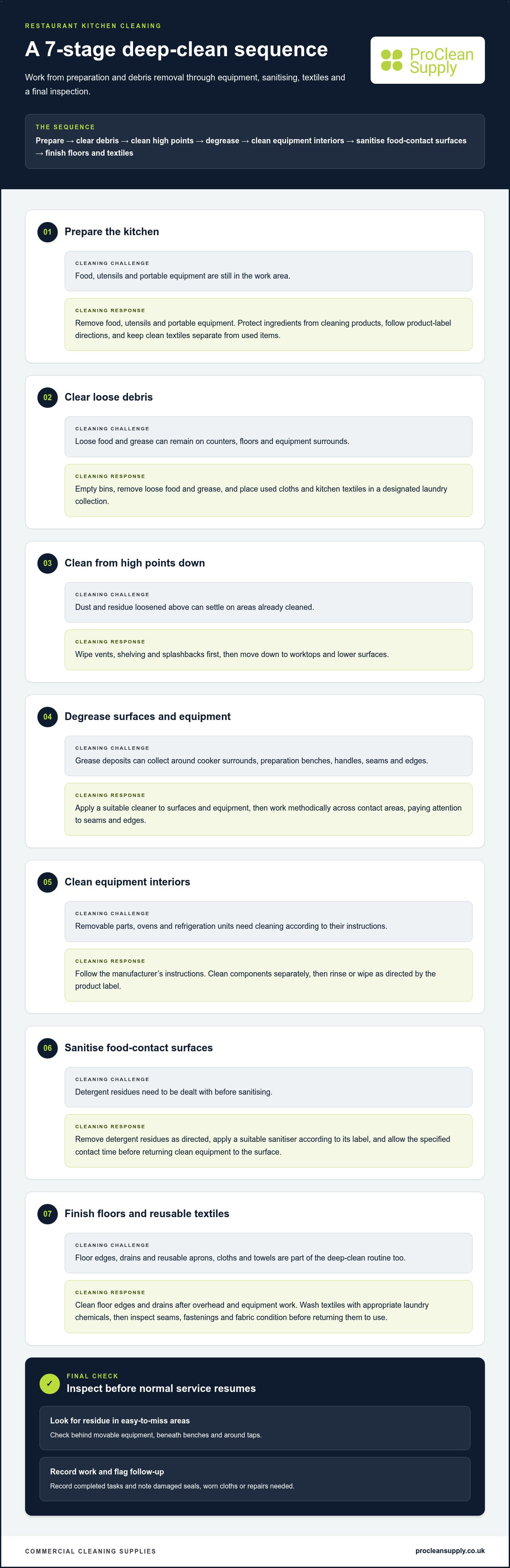
A written sequence helps you deep clean a restaurant kitchen without missing hidden soil. Plan around food preparation, access to equipment and the surfaces that need attention. Assign each task to someone responsible, and keep clean textiles separate from used items throughout.
- Prepare the kitchen. Remove food, utensils and portable equipment from the work area. Protect ingredients from cleaning products, and follow product label directions for use and handling.
- Clear debris. Empty bins and remove loose food and grease from counters, floors and equipment surrounds. Put used cloths and kitchen textiles into a designated laundry collection.
- Clean high points first. Wipe vents, shelving and splashbacks before moving down to worktops and lower surfaces. This prevents loosened dust and residue settling on areas already cleaned.
- Degrease equipment and surfaces. Apply a suitable cleaner to cooker surrounds, preparation benches and handles. Work methodically across contact areas, paying attention to seams and edges where deposits collect.
- Clean equipment interiors. Follow the manufacturer’s instructions for removable parts, ovens and refrigeration units. Clean each component separately, then rinse or wipe as directed by the product label.
- Sanitise food-contact surfaces. Remove detergent residues as directed, then apply a suitable sanitiser according to its label. Allow the specified contact time before returning clean equipment to the surface.
- Finish floors and textiles. Clean floor edges and drains after overhead and equipment work. Wash reusable aprons, cloths and towels with appropriate laundry chemicals, then inspect seams, fastenings and fabric condition before putting them back into use.
Finish with a visual inspection. Check behind movable equipment, beneath benches and around taps for residue. Record completed tasks and flag damaged seals, worn cloths or repairs needed before normal service resumes. This final check connects the cleaning sequence with textile inspections and helps catch missed areas.
How often should commercial kitchens be deep cleaned in the UK?
There is no single deep-clean interval for every commercial kitchen. Set the schedule according to how quickly grease, food debris and moisture build up, then adjust it when inspections or changes in kitchen use call for attention. For example, a busy fry station may need more frequent detailed cleaning than a lightly used dry-storage area.
Separate routine cleaning from scheduled deep cleaning. Staff should clear visible spills and food debris as they occur, then clean key surfaces during the regular close-down. Deep-clean tasks target less accessible areas, including appliance sides, shelving joints, floor edges and extraction surfaces. Add each area to a written schedule instead of relying on memory.
Use these factors to set priorities:
- Cooking method: frying and grilling can leave grease on nearby surfaces and equipment.
- Service volume: sustained preparation and turnover can increase residue on handles, benches and floors.
- Room layout: tight gaps behind appliances can collect deposits and take longer to inspect.
- Materials and condition: worn seals, damaged surfaces or hard-to-clean joins may need closer attention.
- Inspection results: recurring residue in a particular zone signals that its task frequency or method needs review.
Organise the rota by area and task. A kitchen manager can assign named responsibilities for ovens, cold storage, walls, floors and reusable textiles. Review the rota when menus, equipment or service patterns change. If a grill starts producing heavier grease deposits after a menu change, include its surrounding surfaces in the deep-clean cycle sooner.
Record when each task is completed and note any missed areas or repairs. This helps managers spot repeated build-up and revise the schedule using actual kitchen conditions. For routine planning, a commercial cleaning supply plan can help keep suitable products aligned with the tasks and surfaces being maintained.
Which UK food hygiene regulations and cleaning records apply to restaurant kitchens?
Include kitchen cleaning controls in documented food-safety procedures. Specify the surfaces, equipment, methods and responsible roles, as well as what to do if a task is missed or ineffective. For example, record the fryer surround, preparation benches and floor drains as separate tasks instead of writing only “kitchen cleaned”.
Make records specific enough to show what was done and where. A useful entry names the task, area, completion time, person responsible and any follow-up. If a grill surround is still greasy after cleaning, record the re-clean and review the method. These details help managers monitor recurring problems.
- Cleaning schedule: list equipment and areas, including handles, shelving, sinks and floors.
- Completion log: note the task, date, time and responsible staff member.
- Corrective action record: document missed tasks, visible residue, repairs and the action taken.
Make the schedule practical during service and close-down. Assign named roles for tasks such as cleaning refrigeration handles and checking floor edges. Staff should follow the product label instructions, including dilution, application and contact time where specified. Keep the instructions accessible with the procedure.
Record inspections as well as completed work. A supervisor can check a cleaned preparation bench, equipment handles or a drain surround, then note the result. If a surface fails inspection, record what needs repeating and who will do it. Avoid broad tick-box entries that do not identify the area or follow-up.
Include textile checks in the same system. Record the collection and washing of reusable cloths, aprons and towels, then note any visible damage found during inspection. Set aside frayed cloths or items with damaged fastenings for repair or replacement. Review records when menus, equipment layouts or cleaning methods change, so the procedure reflects current tasks.
How do you safely clean commercial ovens, grills, fryers and extraction hoods
Start with the manufacturer’s instructions for each appliance. Schedule cleaning while equipment is out of use and isolate it according to the site’s safe working procedure. Let hot parts and oil cool before handling. Staff should use the cleaning products and protective equipment specified by product labels and workplace procedures.
- Ovens: Remove trays and racks if the manufacturer permits. Clean removable parts separately, then treat the oven interior with a suitable product. Keep chemicals away from heating elements, fans and electrical controls unless the appliance instructions allow contact. Rinse or wipe surfaces as directed, and dry components before refitting.
- Grills: Wait until the grill is cool, then remove detachable plates or trays according to its instructions. Lift off food debris before applying a degreaser. Clean around burners and controls without soaking components. Rinse and dry cleaned parts as directed before reassembly.
- Fryers: Switch off the fryer and let the oil cool before draining it. Follow the manufacturer’s method for draining, filtering or disposing of oil. Clean the tank and removable baskets with products suitable for those surfaces. Keep water and cleaning chemicals out of the oil supply.
- Extraction hoods: Remove grease filters only as the manufacturer directs. Clean filters and accessible hood surfaces with a compatible degreaser, then rinse or dry as specified. Avoid spraying electrical components, and don’t dismantle ductwork unless authorised and trained.
Use separate cloths for appliance interiors and surrounding surfaces to avoid spreading loosened grease. Follow label directions for dilution, application and contact time. Never mix cleaning chemicals. After cleaning, check that parts are dry, correctly refitted and free of visible residue before returning equipment to service. Record damaged seals, loose fittings or persistent grease for maintenance follow-up. If a component cannot be cleaned safely using the available instructions and training, stop and escalate the task through the site’s maintenance procedure.
Pro Clean Supply: BAC 50 - Benzalkonium Chloride 50% Professional Biocide
Pro Clean Supply offers BAC 50 - Benzalkonium Chloride 50% Professional Biocide for commercial cleaning requirements. It can sit within a kitchen’s planned hygiene programme alongside suitable cleaning products for catering and hospitality. Match each product to the surface and task, and follow its label directions for use. For food-contact surfaces, ensure the cleaning and sanitising steps follow the product instructions and your site procedures.
Textiles need a separate care process. Pro Clean Supply’s laundry and carpet cleaning chemicals support washing reusable kitchen cloths, aprons and towels. Inspect items after washing and set damaged textiles aside for repair or replacement before reuse. Keeping textile care separate from surface cleaning helps staff manage both parts of the hygiene routine.
Explore Pro Clean Supply’s commercial cleaning and laundry products.
Make kitchen hygiene part of the operating plan
Knowing how to deep clean a restaurant kitchen is the starting point. Next, fit the process around daily operations, staff responsibilities and equipment maintenance. Use inspection findings to identify recurring build-up, worn surfaces and repairs before they disrupt cleaning routines. Keep the plan practical: make tasks clear to the people carrying them out, and review it when equipment or menus change.
Include textile care in the plan. Reusable cloths, aprons and towels need regular washing and condition checks. Keep damaged textiles separate from clean stock so worn items do not return to use unnoticed. A consistent approach makes it easier to spot where supplies or procedures need attention.
For products that support commercial kitchen cleaning and laundry routines, contact Pro Clean Supply. Build a process your team can follow and maintain with confidence.
Frequently Asked Questions
What cleaning products and disinfectants are suitable for commercial kitchen surfaces in the UK?
Choose a cleaner or degreaser suited to the surface and soil. Use a disinfectant or sanitiser only where its label permits the application. Pro Clean Supply offers catering and hospitality cleaning products, degreasers and hard-surface cleaners, plus disinfectants, biocides and sanitisers. Before use, read the product label and current Safety Data Sheet, including the instructions for food-contact surfaces. Never assume a product is suitable for every material or task.