

Infection control laundry products for care homes and wash needs
Laundry is part of infection control, not just housekeeping. Infection control laundry products for care homes support a process built on safe handling, separation of contaminated items and an effective wash cycle. For thermal disinfection, laundry is held at 65°C for at least 10 minutes or at 71°C for at least 3 minutes.
Keeping clean linen separate from used or soiled items is essential, but the wash process matters too. The right approach depends on the textiles, the level of contamination and whether items can tolerate heat.
This article explains how laundry procedures can help reduce cross-contamination, what temperature and cycle requirements to consider, and how to handle laundry from residents with known infections. It also covers common risks, including unsafe handling and contaminated equipment or storage areas.
Key Takeaways
- Match the disinfection method to the fabric and contamination level; heat-sensitive items may need a different approach.
- Use clear separation and one-way laundry-room workflows to reduce the chance of clean linen meeting used items.
- For laundry from residents with known infections, avoid shaking or sorting items at the point of removal and follow PPE and hand-hygiene procedures.
- Reduce overlooked risks by keeping machines, trolleys and storage areas clean, and avoiding overloaded laundry receptacles.
1. Temperature and duration requirements for laundry disinfection
Thermal disinfection depends on holding laundry at the specified temperature for the required time. Care-home laundry cycles use either 65°C for at least 10 minutes or 71°C for at least 3 minutes. These are hold times, not simply the total programme duration.
Commercial washing machines can run dedicated hot-wash and sluice cycles. The selected programme needs to reach and maintain its disinfection temperature; overloading can interfere with effective washing. For conventional domestic-design machines with low loading, below 0.056 kg/litre, add four minutes to the specified cycle time. The cycle must suit both the machine and the laundry being processed.
Domestic machines may be unreliable for this purpose: a reported study found 50% failed to reach disinfection temperatures. Care homes commonly use thermal washes at 60°C or higher, but temperature alone does not establish that a load has received thermal disinfection. Washing residents’ clothes at 70°C may shrink or ruin them. Heat-sensitive fabrics such as silk and lace also need a suitable alternative.
Thermal disinfection uses heat and a defined dwell time. Chemical disinfection can enable washing at lower temperatures, but relies on a system and products with suitable disinfection claims; standard detergent alone should not be treated as a substitute. BS EN 14065:2016 is an infection-control risk-management standard used in commercial laundries. It concerns laundry risk management, rather than acting as a blanket product certification.
There is no single UK price for commercial infection-control laundry products: cost depends on product type, concentration, pack size and the dose used per wash. Compare the cost per correctly dosed cycle, not just the container price.
For thermal disinfection, use the stated hold times of 65°C for at least 10 minutes or 71°C for at least 3 minutes. These are thermal-disinfection parameters, not a guarantee that every cycle kills every pathogen; machine performance and the full process matter.
2. What is infection control in care homes?
Infection control means reducing opportunities for pathogens to spread between residents, staff and shared spaces. Contaminated textiles can carry COVID-19, Norovirus and influenza. Laundry segregation and controlled handling help prevent those pathogens moving from a resident’s room into clean linen supplies. Choosing infection control laundry products for care homes is one part of this wider process, not a substitute for consistent working procedures.
In England, care-home infection prevention policies should reflect the 10 criteria in the Health and Social Care Act 2008 code of practice, according to the Department of Health and Social Care. HTM 01-04 provides guidance on linen decontamination in health and social care. Care homes across England, Scotland, Wales and Northern Ireland should follow the applicable infection-control policy for their setting.
Keep clean, used and soiled laundry separate from collection through storage and washing. Label bags and baskets so staff can identify each load. In the laundry room, maintain separate dirty and clean storage areas, with a one-way workflow through washing and drying. Keep clean-laundry trolleys and surfaces apart from those used for dirty items.
For infected or heavily soiled items, use an appropriate sealed, soluble bag. Place infected linen in a red water-soluble bag, then put it inside a suitable outer bag for transport. Process it separately from other laundry. Staff should wear appropriate PPE, avoid shaking or rinsing items, and never empty dirty laundry onto the floor. These steps limit unnecessary contact with contaminated textiles.
Trained staff should follow the same separation and handling procedures for each load. Laundry products should suit the intended application and carry appropriate disinfection claims; standard detergent alone should not be treated as a disinfectant. Infection control laundry products for care homes should fit the home’s established process and product directions. Laundry cleaning chemicals can support laundry operations when selected for their intended use.
3. Handling laundry from residents with known infections
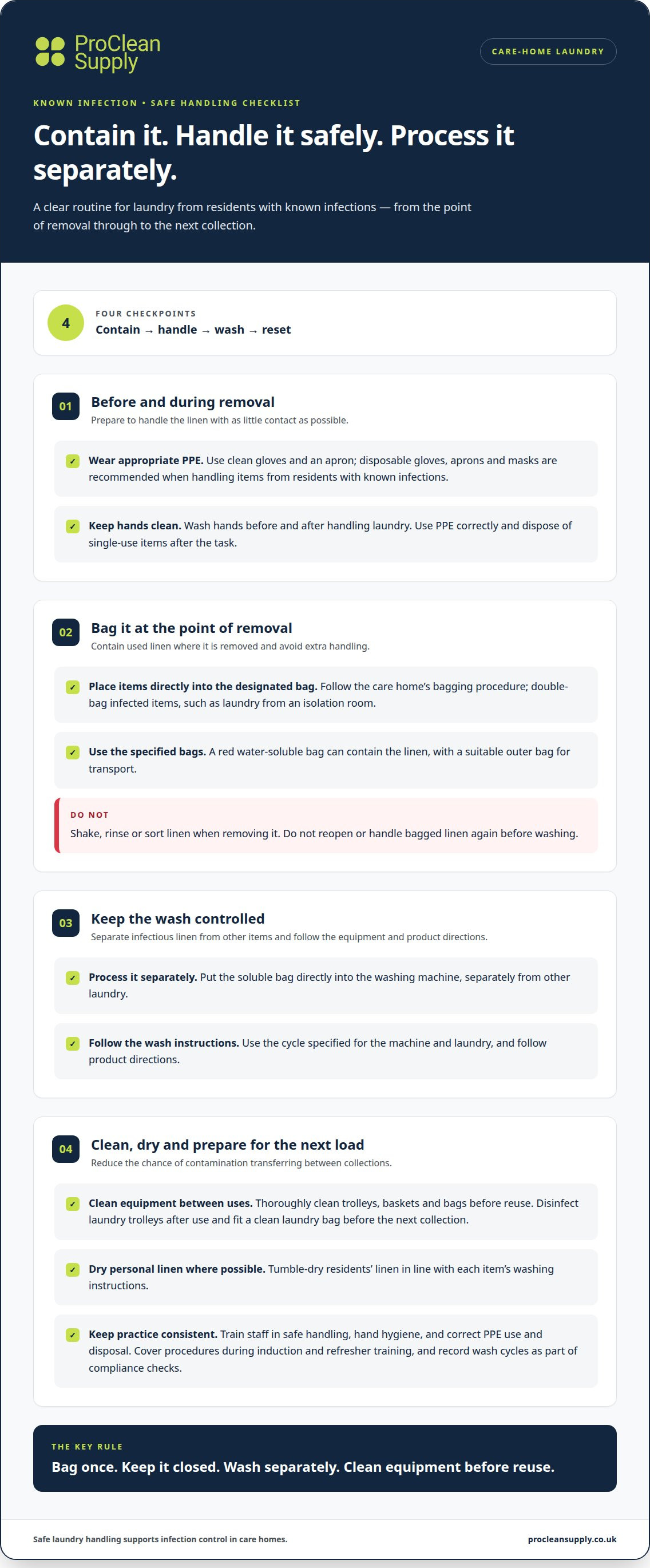
For residents with a known infection, contain used linen where it is removed. Staff should wear clean gloves and an apron, then wash their hands before and after handling laundry. Disposable gloves, aprons and masks are recommended when handling items from residents with known infections. Use PPE correctly and dispose of single-use items after the task.
Do not shake, rinse or sort linen when removing it from beds or trolleys. Shaking can disperse bacteria into the air, while sorting creates extra contact with soiled fabric. Place items directly into the designated bag and avoid unnecessary handling. Once used linen has been bagged, staff should not reopen or handle it again before washing.
For infectious linen, follow the care home’s bagging procedure. Double-bag infected items, such as laundry from an isolation room. A red water-soluble bag can contain the linen, with a suitable outer bag for transport. Put the soluble bag directly into the washing machine, separately from other items. Follow the product and machine instructions for the wash cycle.
Keep the route from collection to processing controlled. Thoroughly clean trolleys, baskets and bags before reuse between washes or collections. Disinfect laundry trolleys after use and fit a clean laundry bag before loading the next collection. These steps reduce the chance of transferring contamination between loads, residents or clean linen.
Tumble-dry residents’ personal linen where possible, following each item’s washing instructions. Staff training should cover safe handling, hand hygiene, and the correct use and disposal of PPE. Include these procedures in induction and reinforce them through refresher training. Record wash cycles as part of compliance checks to keep laundry processes consistent across shifts.
4. Laundry-related infection risks in care homes
A washing cycle is only one part of laundry hygiene. Bacteria or viruses may linger on machine surfaces if equipment is not cleaned regularly. In a care home, contamination can transfer from a door seal, handle or control panel to hands, baskets or clean linen. Include these touchpoints in routine cleaning and disinfection.
Overfilled laundry receptacles and trolleys create another handling risk. They can make loads harder to move without contact with soiled items, while overloaded machines may restrict water movement through laundry. Keep loads within equipment capacity, and clean and disinfect laundry-room touchpoints between loads. Record cleaning responsibilities, methods and frequencies in the care home’s schedule.
Incorrect dosing or inadequate washing can leave laundry insufficiently cleaned or disinfected, increasing the risk of contamination carrying into the next stage. Mixing products can also create chemical hazards or undermine product performance. Follow each product’s label and use only combinations expressly directed by its instructions.
Storage matters after processing. Keep clean linen above floor level, away from water and direct sunlight, in a dry, cool area. Damp or exposed storage can compromise clean stock before staff distribute it. Keep clean and dirty laundry areas distinct, using separate trolleys or surfaces to prevent contact between them.
Hand hygiene is a practical control at each transition. Staff should clean their hands after handling used linen, then avoid touching clean stock with contaminated gloves or hands. Keep laundry-room procedures clear and train staff to follow them consistently. For suitable laundry products, explore laundry cleaning chemicals and follow their directions for use. The key takeaway: control the whole route, from collection and washing to storage and distribution, rather than relying on the machine cycle alone.
Pro Clean Supply: Catering & Hospitality Cleaning Products
Pro Clean Supply supplies commercial cleaning products for care-home hygiene routines, including Catering & Hospitality Cleaning Products and Laundry & Carpet Cleaning Chemicals. These products support day-to-day cleaning and laundry operations alongside the handling, separation and wash procedures covered above.
Choose laundry chemicals according to the intended application and product directions. For disinfection tasks, use products with claims suited to that use, and follow their instructions as part of the home’s established infection-control procedures. Pro Clean Supply also offers Disinfectants, Biocides & Sanitisers, including BAC 50 - Benzalkonium Chloride 50% Professional Biocide. Product selection should reflect the surface or process being treated.
If you’re reviewing cleaning and laundry supplies for your care home, contact Pro Clean Supply to discuss the relevant product categories.
Make your laundry procedures easier to sustain
Use your next review to connect product selection with the way laundry moves through your care home. Consider how staff identify each load, follow the correct process and keep supplies aligned with daily procedures. Choosing infection control laundry products for care homes should support the established workflow, not create a separate or difficult-to-follow routine.
Where product requirements or cleaning priorities need attention, Pro Clean Supply can help you explore relevant commercial cleaning and laundry categories. A focused conversation can help clarify which products suit your operational needs and how they fit into your existing approach.
Contact Pro Clean Supply to discuss your care home’s cleaning and laundry requirements. A clear, consistent process gives staff a practical foundation for managing laundry with confidence.
Frequently Asked Questions
What role does laundry play in infection control?
Laundry can carry contamination between a resident’s room and shared clean-textile supplies. Bedding, towels and personal clothing pass through several hands and across surfaces before reuse. Treating collection, processing and distribution as one controlled workflow helps identify where contamination could transfer. For example, define a clear endpoint for clean-linen handling, rather than treating the end of a wash cycle as the end of the process.
How can you reduce the risk of infection in laundry processes?
Make the process repeatable and document exceptions. A designated staff member can record a cycle that stops early, a machine fault or a load requiring reprocessing, then follow the home’s procedure before releasing linen. Keep service and calibration records with laundry documentation. This helps managers spot recurring equipment or workflow issues and address them systematically.
What is infection control in care homes?
Infection control is the set of policies and routine precautions used to limit infection transmission in a care setting. It covers more than laundry: staff apply hand hygiene, manage shared spaces and follow procedures suited to the task. In England, the Department of Health and Social Care’s code of practice sets out 10 criteria for infection prevention and control policies.
Which laundry detergents and disinfectants are suitable for care-home linen?
Use a detergent suited to the textile and washing process. Select a disinfection product only when its label supports the intended laundry application. Check dosing, compatibility and instructions for the machine and fabric. Do not assume a detergent disinfects. Never mix products unless the manufacturer expressly instructs you to; follow the product label and Safety Data Sheet.
How should heavily soiled or infectious laundry be handled and washed?
Heavily soiled items may need a sluice pre-wash before the main wash. Keep these loads separate and follow the care home’s designated procedure, including the specified bag and machine process. Do not rinse items by hand or transfer them between containers unnecessarily. Process the load according to fabric care instructions and the selected disinfection method.
What PPE and procedures protect staff handling contaminated laundry?
Staff handling contaminated linen should use appropriate PPE, including gloves and an apron; masks may also be used for laundry from residents with known infections. Training should cover how to put on and remove PPE, dispose of single-use items and perform hand hygiene afterwards. Keep clean supplies and work surfaces untouched until PPE has been removed and hands cleaned.