

How to Use Diluted Vinegar to Treat Mildew Odours in Towels
The cure for musty towels starts with the wash routine, not stronger fragrance. For teams learning how to remove mildew smell from towels commercially, soak towels in warm water with one cup of white vinegar for 30 to 60 minutes, then wash them using half the recommended amount of detergent. Dry them completely as soon as the wash ends.
A persistent mildew smell often means towels have stayed damp too long, whether bundled together or left in the washing machine. Detergent and fabric-softener residue can also build up on fibres, reducing absorbency and slowing drying. Masking the smell does not address these causes.
This guide explains why towels develop musty odours and outlines practical steps for refreshing them with diluted white vinegar and careful washing. It also covers ways to prevent the smell returning, including managing laundry loads and ensuring towels dry fully before storage.
Key Takeaways
- Identify how damp storage and residue on towel fibres can contribute to persistent musty odours.
- Use diluted white vinegar as a pre-wash soak, then launder towels with a measured amount of detergent.
- Improve drying practices by moving towels promptly after washing and ensuring they are completely dry before storage.
- Apply a consistent commercial laundry process, with suitable load sizes and routine attention to odour sources.
Can vinegar remove mildew smells on clothes?
- Identify the moisture source. Wet towels left bundled for 24-48 hours can develop mildew odours as mould and bacteria proliferate. A damp load left in the washing machine can also acquire a musty smell. Separate used towels promptly and avoid leaving washed laundry inside the machine.
- Use a white-vinegar soak. Mix one cup of white vinegar with warm water and soak affected towels for 30 to 60 minutes. Then wash them with half the recommended amount of detergent. Follow the towel care label, and don’t combine vinegar with bleach.
- Clean the washing machine if odours recur. Run an empty hot cycle with a washing-machine cleaning tablet or baking soda about every 30 days. Residue and moisture inside the machine can transfer stale odours to clean laundry, so leave the drum open to dry after use.
- Choose laundry products for the fabric. Use a commercial laundry detergent according to its label, with an oxygen bleach product only when its instructions and the towel care label permit. Oxygen bleach is not a substitute for checking wash temperature and product compatibility.
- Use sanitiser carefully. Laundry sanitiser can be added alongside regular detergent, following its label; it should not replace detergent. Chlorine bleach may damage coloured or delicate towels. Never mix it with vinegar, because the combination produces toxic chlorine gas.
- Decide whether to discard a towel. Launder it first, then assess whether the mildew smell remains and whether the fabric is visibly damaged. If odour persists after washing and thorough drying, or the towel is deteriorating, replace it rather than returning it to service.
Why do my towels smell?
- Transfer laundry promptly. Move towels from the washing machine to drying as soon as the cycle ends. Damp fabric left in a closed drum stays poorly ventilated, allowing odours to develop. In commercial laundry routines, make unloading a defined step rather than leaving completed loads until the next task.
- Give towels room to dry. Spread each towel fully on a rack or line, rather than folding it over itself. A crowded rail restricts airflow through thick fabric. In a bathroom, use available ventilation and keep the door open where practical to help moisture escape.
- Dry each towel completely. Check thick hems, folded edges and the centre of larger bath towels before storage. A towel that feels dry on the surface may retain moisture in dense areas. Don’t stack or fold laundry until every section is dry.
- Use direct sunlight when air-drying. Hang towels in direct sunlight where practical, with space between each item. Sunlight’s UV rays can help remove scents associated with bacteria. Turn a towel during drying if one side remains shaded or damp.
- Move dryer loads on time. Take towels out when the cycle finishes, then separate and check them before folding. Towels left sitting in a tumble dryer may develop odours as bacteria multiply within one to two hours. If they remain damp, continue drying before storage.
- Manage chemical dosing safely. In UK commercial laundry, use detergent, bleach and sanitiser according to each product’s label and safety data sheet. Follow specified dilution, handling, storage and protective-equipment instructions. Never mix incompatible products, including vinegar and chlorine bleach.
- Keep dosing consistent. The correct detergent, bleach or laundry-sanitiser quantity depends on the product directions, load and wash process. Measure the stated amount rather than estimating. Tea tree oil is sometimes added at 5-10 drops, but only use an additive if it suits the fabric and washing-machine instructions.
Removing musty smells from towels
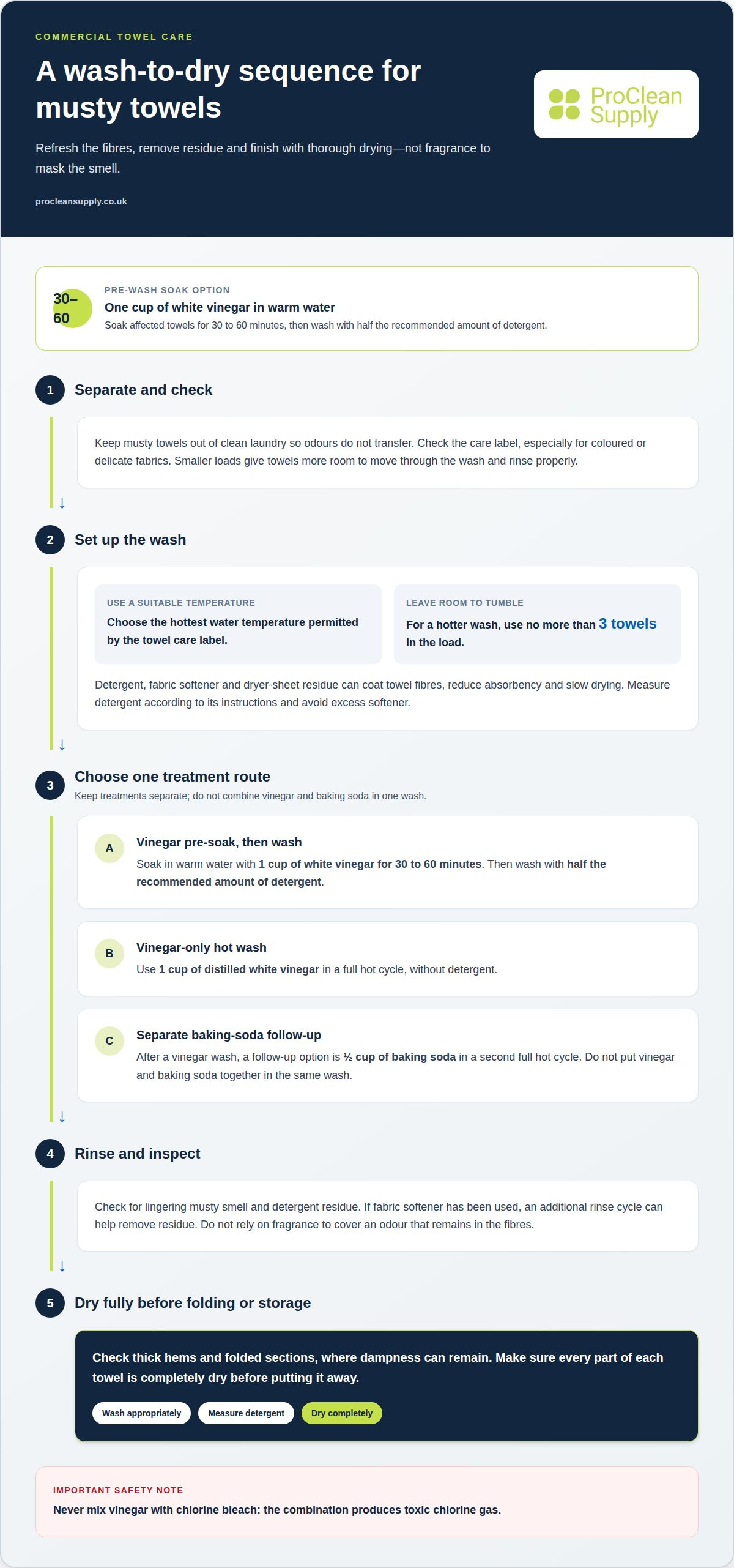
- Separate affected towels. Keep musty items out of clean laundry so odours don’t transfer. Check care labels before selecting a wash setting, especially for coloured or delicate fabrics. Smaller loads give towels more room to move through the wash and rinse properly.
- Reduce residue build-up. Detergent, fabric softener and dryer-sheet residue can coat towel fibres, reducing absorbency and slowing drying. Use detergent according to its instructions, and avoid adding excess softener. A towel that absorbs less moisture can stay damp longer, allowing odours to return.
- Choose a suitable wash temperature. Select the hottest water temperature permitted by the towel care label. For a hotter wash, keep the load to no more than three towels. This gives each towel space to tumble rather than forming a dense bundle.
- Try a vinegar-only wash. For a musty load, use one cup of distilled white vinegar in a full hot cycle without detergent. A separate towel-refresh method uses one cup of white vinegar in a second hot wash. Treat these as alternative wash approaches, not an invitation to combine cleaning products.
- Use baking soda as a separate treatment. After a vinegar wash, a follow-up option is ½ cup of baking soda in a second full hot cycle. Don’t put vinegar and baking soda together in the same wash. Separate cycles allow each treatment to work without combining them.
- Rinse and inspect. Check the towel after washing for lingering musty smell and detergent residue. If fabric softener is used, an additional rinse cycle can help remove residue. Don’t rely on fragrance to cover an odour that remains in the fibres.
- Finish with complete drying. Dry towels fully before folding or storing them. Check thick hems and folded sections, where dampness can remain. A consistent wash setting, appropriate detergent dose and thorough drying are the practical sequence for reducing recurring odours.
How do commercial laundries remove mildew smell from towels?
- Sort by fabric and condition. Separate heavily musty towels from routine laundry and check care labels before setting the wash programme. This helps prevent unsuitable temperatures or treatments from damaging fibres. Remove towels with visible deterioration from circulation for assessment.
- Control load size. Avoid overloading the machine. Towels need room to move through the wash and rinse stages, rather than compressing into a dense bundle. For a hotter wash, keep the load to no more than three towels.
- Select a fabric-safe temperature. Use the hottest setting permitted by each towel’s care label. Heat can support effective washing, but the fabric determines the suitable setting. Keep the programme consistent for comparable towel types.
- Measure the detergent dose. Use a laundry detergent suited to the load and follow its product directions. Adjust the dose according to the stated instructions, rather than adding extra detergent to mask odour. Excess residue can reduce absorbency and make towels slower to dry.
- Add sanitiser only as directed. Laundry sanitiser is used alongside regular detergent, not as its replacement. Follow the sanitiser’s label for the correct dosing stage and wash conditions. Never combine vinegar with chlorine bleach, which produces toxic chlorine gas.
- Inspect after the wash. Assess each towel for remaining musty odour and detergent residue before drying. A lingering smell can indicate that the laundering process needs attention. Review load size, product dose, rinse performance and the machine’s cleanliness.
- Dry immediately and fully. Transfer towels from the machine as soon as the cycle finishes. Dry them completely before folding or storage, checking thick hems and dense sections. Damp towels can develop odours again, even after a correctly run wash.
- Standardise the process. A practical approach to how to remove mildew smell from towels commercially is a repeatable wash-and-dry procedure. Record the programme, detergent dose and any additional product used for each towel type. Documenting how to remove mildew smell from towels commercially makes it easier to identify where odours return and adjust the relevant laundry stage. Explore suitable laundry options for your operation.
Pro Clean Supply
Pro Clean Supply supplies laundry and carpet cleaning chemicals for commercial and professional use. If towel odours keep returning, suitable laundry products can support a consistent wash process alongside correct dosing, machine hygiene and thorough drying. Choose products for the fabric, wash programme and intended application, and follow the product label.
For hospitality settings, Pro Clean Supply’s catering and hospitality cleaning products support routine cleaning requirements. Choose supplies that suit your operation and follow each product’s instructions. Pro Clean Supply supplies cleaning products, rather than carrying out laundry or cleaning work.
For information about suitable cleaning supplies for your requirements, contact Pro Clean Supply.
Build a repeatable laundry process
To remove mildew smell from towels commercially, make odour control part of routine laundry management. Treat recurring smells as a process issue: review how soiled towels are handled, how wash loads are managed and how clean stock is stored. A clear procedure helps staff apply consistent standards across shifts and identify where dampness or residue may be reintroduced.
Keep the routine practical. Assign responsibility for moving finished loads, checking towels before storage and preparing the washing area for the next cycle. Choose cleaning supplies for their intended use and follow the product label.
Contact Pro Clean Supply to discuss suitable cleaning supplies for your requirements. A consistent process gives your team a clear foundation for fresher, ready-to-use towels.
Frequently Asked Questions
Does baking soda get rid of mildew smells?
Yes, baking soda can help reduce musty odours during laundering. Add ½ cup to a separate hot wash, following the towel’s care label and the washing-machine instructions. Do not add it to the same cycle as vinegar. After washing, check for lingering odour and ensure the towel dries fully. If residue remains, an additional rinse can help clear product build-up from the fibres.
Can I wash towels with vinegar first?
Yes. Use white vinegar in a separate wash before laundering with detergent, or soak towels in diluted vinegar before their regular wash. Follow the fabric care label and machine instructions. Never combine vinegar with chlorine bleach, as the mixture produces toxic chlorine gas. If towels still smell after washing, check the machine’s condition and how the load is dried.
Does direct sunlight help with mildewy smells?
Yes, direct sunlight can help reduce scents associated with bacteria when towels are air-dried. Spread each towel out rather than folding it over a line, and turn it if one side stays shaded. Sunlight does not replace thorough drying: check the hems and thick sections before folding. Store towels only when completely dry.
How do I clean stinky towels?
Wash affected towels separately from clean laundry, using a suitable cycle and the detergent dose stated on its label. For a vinegar treatment, keep it separate from bleach and follow it with a wash. If odours persist, check that the machine is clean. Dry towels fully before storage, then assess the fabric and smell before returning them to use.
What causes mildew smell in towels after washing?
Odour after washing can result from towels left damp in the machine, incomplete drying or residue on the fibres. A washing machine that needs cleaning can also contribute to recurring smells. Check whether the load was crowded, detergent or softener residue remains, or thick hems failed to dry fully. These clues help pinpoint where the laundry process needs attention.
What wash temperature and cycle remove mildew odour from towels safely?
Choose the hottest water temperature suitable for the towel fabric, as stated on its care label. Use an appropriate wash programme and avoid overloading the machine, so towels can move freely during washing and rinsing. If odour remains, review detergent dosing and machine cleanliness before repeating the treatment. Dry towels completely after the cycle.