

How to Remove Rust Stains from Patio Slabs with Soap and Water
Pressure washing isn’t always the best first step for removing rust stains from patio slabs. For a light mark, apply warm water and washing-up liquid, let it loosen the stain, then gently scrub with a stiff-bristle brush and rinse. On outdoor ceramic tiles, use a soft brush or non-scratch sponge to avoid scratching the surface.
It can be tempting to reach straight for a pressure washer, especially when rust appears beneath garden furniture or a barbecue. But iron particles can settle into porous paving, so the stain’s source and the slab material both affect which cleaning method is suitable.
This guide explains how rust forms, how to treat light marks with washing-up liquid and water, and when to pre-treat before pressure washing. It also covers why persistent stains may need a treatment made for the paving material, rather than harsher scrubbing or a general patio cleaner.
Key Takeaways
- Trace the mark to its source, such as metal furniture, garden tools or iron-rich water, to reduce the chance of fresh staining.
- Start with a mild cleaning method for light marks, and use a soft brush on outdoor ceramic tiles to help protect the surface.
- Pre-treat persistent stains before pressure washing; a 25-degree nozzle offers a balance of pressure and coverage.
- Natural stone can absorb iron particles, so identify the paving material before choosing a treatment or escalating to stronger cleaning.
Using a pressure washer after pre-treating stains
UK rust-remover prices vary by formulation and pack size. The quantity you need depends on the stained area, paving porosity and the coverage stated on the label.
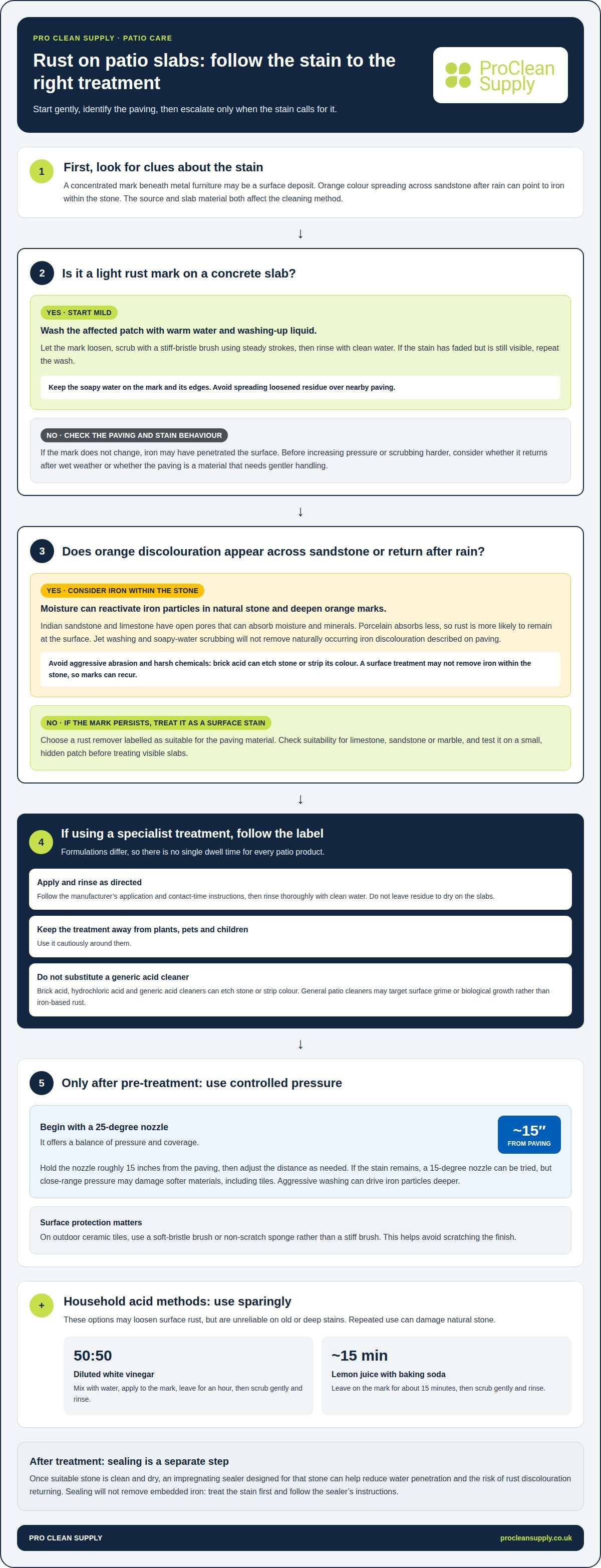
- Choose a treatment for the slab material. Select a specialist rust remover designed for stone, and follow its manufacturer’s instructions. Check suitability for limestone, sandstone or marble before applying anything. Brick acid, hydrochloric acid and generic acid cleaners can etch stone or strip colour. Test the chosen treatment on a small, hidden patch first.
- Apply the treatment as directed. Rust removers have different formulations, so there is no single dwell time for every patio product. Follow the label for application and contact time, then rinse thoroughly with clean water as instructed. Don’t leave residue to dry on the slabs. Keep the treatment away from plants, pets and children, and use it cautiously around them.
- Use the washer with controlled pressure. After pre-treatment, begin with a 25-degree nozzle for a balance of pressure and coverage. Hold it roughly 15 inches from the paving, then adjust the distance as needed. A 15-degree nozzle can be tried if the stain remains, but close-range pressure may damage softer materials, including tiles. Aggressive washing can also drive iron particles deeper.
- Use household acids sparingly. Diluted white vinegar may loosen surface rust: mix it with water at a 50:50 ratio, apply to the mark, leave for an hour, then scrub gently and rinse. Lemon juice with baking soda can sit for about 15 minutes before gentle scrubbing and rinsing. These methods are unreliable on old or deep stains, and repeated use can damage natural stone.
- Seal suitable stone after treatment. Once the slabs are clean and dry, apply an impregnating sealer suitable for that stone. It helps reduce water penetration and the risk of rust discolouration returning. Sealing won’t remove embedded iron, so treat the stain first and follow the sealer’s instructions.
Cleaning light rust stains with washing-up liquid and water
- Start with a mild wash. For a light rust mark on concrete patio slabs, mix washing-up liquid with warm water, apply it to the stain and leave it until the mark loosens. Then scrub with a stiff-bristle brush and rinse the area with clean water. Repeat the wash if the stain remains visible.
- Work on the mark, not the whole patio. Apply the soapy water directly to the affected patch, including the edges where orange discolouration meets clean concrete. This keeps the cleaning focused and makes it easier to see whether the stain is lifting. Avoid spreading loosened residue over nearby paving as you scrub.
- Use controlled brush pressure. Scrub the concrete with steady strokes rather than forceful, rapid abrasion. A stiff-bristle brush helps loosen a surface mark, but aggressive scrubbing can scratch slabs or leave dull patches. For outdoor ceramic tiles, switch to a soft-bristle brush or non-scratch sponge to protect the finish.
- Rinse and assess before repeating. Flush away washing-up liquid and loosened rust with clean water, then inspect the slab once the surface is clear. If the mark has faded but remains, repeat the wash. If it does not change, the iron may have penetrated the surface, so washing-up liquid alone may not address the stain.
- Escalate carefully when needed. General patio cleaners target surface grime or biological growth, not necessarily iron-based rust. For persistent marks, choose a treatment labelled as suitable for the paving material and follow its instructions. Patio and driveway cleaning solutions are a relevant next step when a mild household wash is insufficient.
Naturally occurring iron discolouration in stone
- Distinguish internal discolouration from a surface deposit. Metal furniture can leave a concentrated mark beneath its feet. By contrast, orange colour developing across sandstone after rain can come from iron within the stone itself. Natural iron in hard, ferrous-type stone can oxidise when wet, producing discolouration without a rusting object nearby.
- Identify porous paving before choosing a treatment. Indian sandstone and limestone have open pore structures that absorb moisture and minerals. Iron particles can enter those pores, making discolouration more persistent than rust resting on a less absorbent surface. Porcelain absorbs less, so rust is more likely to remain at the surface.
- Watch how moisture affects the colour. Rain or other moisture can reactivate iron particles embedded in natural stone. Oxidation may then continue, deepening the orange marks. If the colour returns or becomes more pronounced after wet weather, consider whether iron within the paving is contributing, rather than treating it solely as a fresh spill.
- Match the cleaning method to the cause. Jet washing and soapy-water scrubbing won’t remove naturally occurring iron discolouration described on paving. Harsh chemicals, including brick acid, can etch stone or strip its colour. Avoid escalating pressure or using aggressive abrasion on porous slabs, as these methods don’t address iron within the material.
- Test any suitable treatment discreetly. If using a cleaner, choose one designed for the paving material and apply it to a small, hidden area first. This is particularly important for natural stone, which may discolour or etch when exposed to acids. Follow the product instructions and assess the test patch before treating visible slabs.
- Set realistic expectations for recurring marks. Where iron is present within sandstone, moisture can continue to trigger oxidation after surface cleaning. Treating a visible patch may not remove the underlying source. Consider the stone’s composition and moisture exposure before repeating a cleaning method across the patio.
How rust stains form on patio slabs
- Look for the metal source above the mark. Moisture can contribute to rust staining when iron-bearing materials contact paving. A rusty barbecue, umbrella stand, garden pot or tool can leave an orange patch beneath it. The stain’s position often points to the source.
- Inspect furniture and outdoor fixtures. Metal garden furniture and fire pits left in rainy weather can shed rust onto slabs. Check table legs, chair feet and the base of a fire pit, especially where they rest directly on the patio. Moving the item can prevent further transfer.
- Consider materials carried by water. Irrigation systems, leaking taps and hard water containing trace minerals can contribute to staining. Look for discolouration near a tap, a damp joint or a sprinkler’s watering path. Ferrous-based fertilisers can also leave iron deposits where granules or runoff reach paving.
- Check products used around the patio. Some weed killers and lawn fertilisers contain ferric sulphate iron particles. Spills, splashes or residue tracked onto slabs can create surface marks. Identify where these products are applied and keep them from contacting the paving during use.
- Use the stain pattern to assess its likely origin. A distinct mark under a metal pot suggests contact rust; a trail beside a leaking tap suggests waterborne minerals. On porous paving, iron may penetrate the surface, while porcelain absorbs less, so rust is more likely to remain on top.
- Reduce repeated exposure at the source. Fit rubber feet or pads beneath metal furniture to separate it from the slabs. Address persistent drips and irrigation overspray, and rinse paving after heavy rain to remove mineral residue before it can soak in. For ongoing patio maintenance, choose a suitable patio cleaning solution.
Pro Clean Supply: Patio and Driveway Cleaning Solutions
Pro Clean Supply offers patio and driveway cleaning solutions for maintaining outdoor hard surfaces. Choose a product suited to the paving material and type of soiling: general patio cleaners target surface grime or biological growth, not necessarily iron-based rust.
For rust marks, identify whether the stain is a surface deposit or iron discolouration within porous stone. Use a treatment suitable for the slab material, and follow its instructions. Pro Clean Supply’s wider range also includes BAC 50 - Benzalkonium Chloride 50% Professional Biocide, alongside cleaning products for catering, hospitality, laundry and carpets.
For patio-cleaning product information suited to your maintenance needs, contact Pro Clean Supply.
Make your next patio clean more targeted
At your next maintenance check, note where new marks appear and what is nearby. A stain recurring beside a tap may have a different source from one beneath a plant pot. Keeping a simple record can help you spot patterns, reduce repeated exposure and choose a cleaning approach suited to the paving and stain source.
When removing rust stains from patio slabs, base your next decision on the surface, not just the colour of the mark. Note whether the paving is natural stone, concrete or porcelain, and whether the discolouration is localised or widespread. This can help you narrow down a suitable cleaning product and avoid applying an unsuitable treatment across the patio.
Keep the maintenance plan practical: record the affected area, the treatment used and whether the mark returns. If you need product guidance for your patio, contact Pro Clean Supply for help. A measured approach gives you a clearer starting point for your next clean.
Frequently Asked Questions
How do you remove rust from outdoor ceramic tile?
Apply undiluted white vinegar to the rust mark and leave it for around 15 minutes. Add baking soda, then gently scrub in circular motions with a soft-bristle brush or non-scratch sponge. Rinse the tile thoroughly with clean water and dry it with a cloth. Keep the treatment on the affected tile rather than using it across the whole patio.
What removes rust from natural stone patio slabs without damaging them?
Use a rust treatment specifically designed for the type of stone, and follow its label. Test it on a small, hidden area first: natural stone can discolour or etch, particularly with acidic products. Avoid brick acid, hydrochloric acid and generic acid cleaners on limestone or sandstone. If the orange colour comes from iron within the stone, surface cleaning may not remove the source.
Which commercial rust removers are suitable for UK patio slabs?
Choose a shop-bought rust remover whose label says it is suitable for your paving material. A product made for stone may not suit every tile or slab, so match its instructions to the surface and follow the stated application and rinsing method. Consider the environmental impact, and use it cautiously around plants, pets and children. General patio cleaners may target grime rather than iron stains.
How to remove rust stains from porcelain paving slabs?
Porcelain is less absorbent than natural stone, so rust is more likely to remain on its surface. Try white vinegar or lemon juice diluted with water, then clean gently with a soft brush and rinse. Avoid abrasive tools that could mark the finish. If you use a specialist rust remover, test it on a discreet patch first and follow its directions for porcelain.
How to remove stubborn or old rust stains from patio slabs?
For an old or deeply embedded mark, use a specialist rust treatment suited to the slab material rather than repeatedly scrubbing harder. Follow the product label, including its contact time and rinsing directions. Check whether nearby metal or iron-rich water is replenishing the stain. Widespread or deeply embedded staining may need professional treatment.
How to protect patio slabs from future rust stains?
Separate metal furniture from paving with rubber feet or pads, and check pots and garden equipment for rusting bases. Inspect taps, irrigation and drainage for leaks that keep slabs wet. Rinse away mineral residue after heavy rain. An impregnating sealer suited to the stone can help reduce water penetration and the chance of discolouration returning after treatment.