

How to Clean Stainless Steel Kitchen Surfaces Without Harsh Cleaners
For routine cleaning, harsh products aren’t needed. To learn how to clean stainless steel kitchen surfaces, wipe the worktop with warm water and a little washing-up liquid, using a soft cloth along the grain. Rinse with a clean, damp cloth, then dry the surface to help prevent water marks and limescale.
Fingerprints, grease and dried spills can make stainless steel seem difficult to maintain, but a simple, consistent method is usually enough. The products and tools matter: bleach and chloride-based cleaners can damage the surface, while abrasive pads may scratch it. This guide explains how to clean a stainless steel worktop, choose products for tougher marks, avoid damaging cleaners and finish with a dry, streak-free surface. These practical steps keep routine cleaning effective without relying on harsh chemicals.
Key Takeaways
- For a polished finish, use only a few drops of oil and buff away any excess to reduce residue and fingerprints.
- Dry the surface after washing or spills; standing moisture and hard water can leave marks.
- Avoid bleach and chloride-containing cleaners, which can stain or pit stainless steel.
- Match the cleaning product to the soil and finish, and avoid abrasive pads that may scratch the surface.
How do I clean my stainless steel worktop?
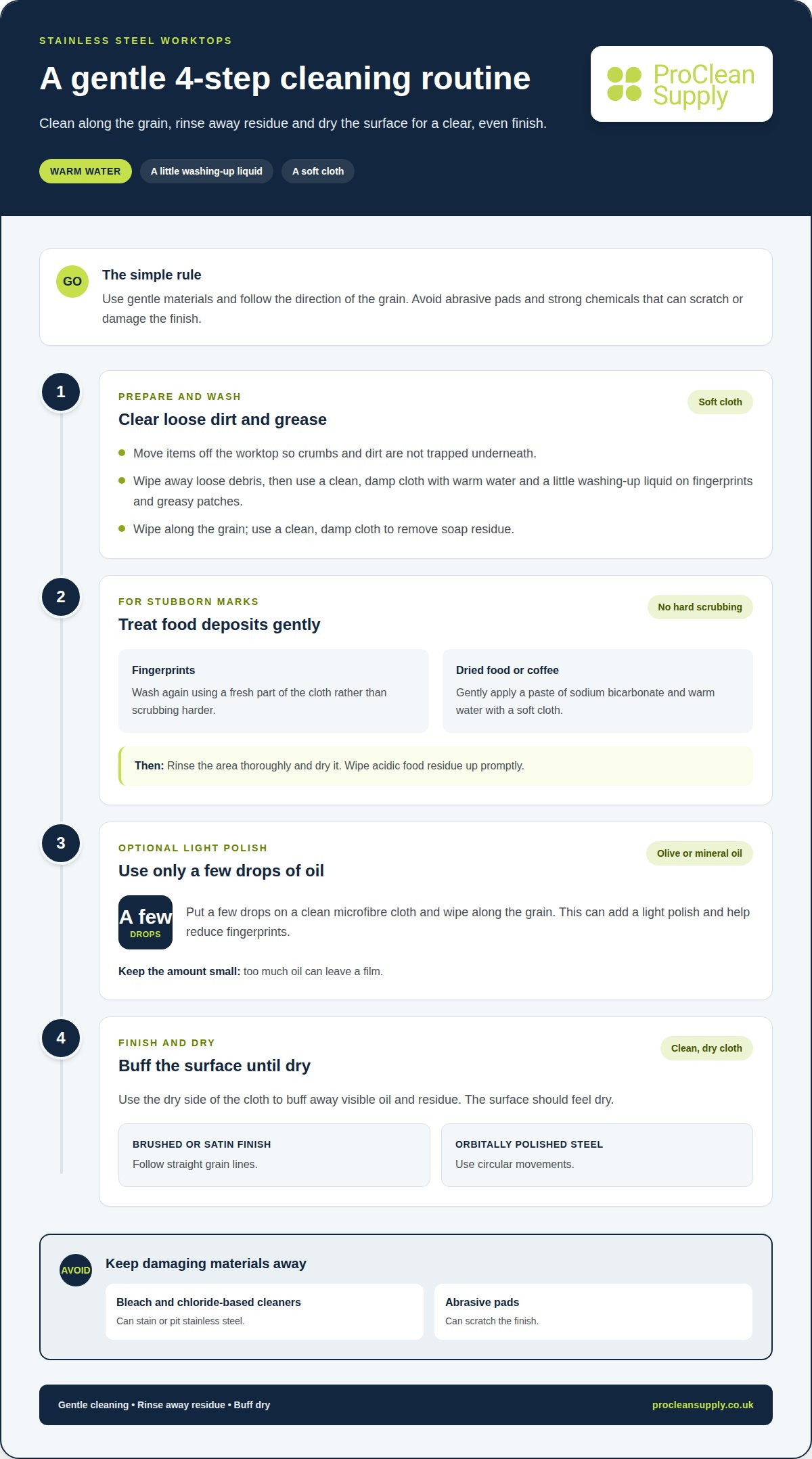
Knowing how to clean stainless steel kitchen surfaces starts with gentle materials: warm water, washing-up liquid and a soft microfibre cloth. Wipe along the grain, rinse away residue and dry the surface. For routine cleaning, avoid abrasive pads and strong chemicals.
-
Remove grease, dirt and fingerprints
Clear appliances and other items from the worktop so crumbs and dirt don’t get trapped underneath. Wipe away loose debris with a soft cloth. For fingerprints and greasy patches, dampen a clean cloth with warm water and a little washing-up liquid. Wipe along the grain, then use a clean, damp cloth to remove soap residue.
-
Treat finger marks and food stains
For stubborn fingerprints, wash again with a fresh part of the cloth rather than scrubbing harder. Lift dried food or coffee deposits with a paste of sodium bicarbonate and warm water, applied gently with a soft cloth. Rinse the area thoroughly and dry it. Wipe up acidic food residue promptly rather than leaving it on the steel.
-
Buff away excess oil
To reduce fingerprints and add a light polish, put a few drops of olive or mineral oil on a clean microfibre cloth. Wipe along the grain, using only a small amount, then buff away visible excess with the dry side of the cloth. Too much oil can leave a film, so keep buffing until the surface feels dry.
-
Restore the stainless steel shine
For a brighter finish, use a clean cloth and a few drops of oil, then buff away residue. Follow straight grain lines on brushed or satin finishes; use circular movements on orbitally polished steel. This can be a useful final step when cleaning stainless steel kitchen surfaces without harsh cleaners. Avoid abrasive pads, which can scratch the finish.
Drying stainless steel to prevent limescale marks
After washing, rinse stainless steel with clean water and dry it with a soft cloth, following the grain. For water spots or limescale, use a 1:1 mixture of vinegar and water; wipe it away, rinse and dry the surface.
-
Rinse and dry the surface
Rinse away detergent with a clean, damp cloth, then dry the worktop promptly with a soft microfibre cloth. Follow the grain to reduce streaks and leave the finish even. Pay particular attention to joins, edges and areas around taps, where droplets can remain. Hard water leaves mineral deposits as it dries, so don’t leave wet cloths, puddles or spilled liquids on the surface.
Use a fresh, dry section of cloth if the first one becomes damp. Check the worktop under good light for remaining water beads or streaks, then wipe those areas again. Regular drying helps prevent limescale marks and limits prolonged moisture, which can contribute to rust staining.
-
Address water spots and limescale
For mineral deposits, apply a 1:1 mixture of vinegar and water to the affected area. Leave it for 5-10 minutes, then wipe gently with a soft cloth. Rinse thoroughly with clean water and dry in the direction of the grain. Avoid repeated vinegar treatments, as repeated use may damage the surface.
Prevent scratches by avoiding steel wool, wire brushes and abrasive household pads. They can mark the protective surface and make the finish more vulnerable to staining. Keep iron objects such as scissors off the worktop, especially when the object or surface is damp. If rust-coloured marks appear, remove the source of moisture and iron contact; don’t scrub with a carbon-steel pad.
For routine soil removal before drying, hard-surface cleaning products can support an effective cleaning process.
Avoiding chloride-containing cleaners and bleach
Choose products intended for stainless steel, and keep bleach and chloride-based cleaners away from the surface. Chlorides can cause staining and pitting, compromising the finish.
- Read the cleaner’s label before applying it to stainless steel. Avoid bleach, hypochlorite, hydrochloric acid-based cleaners, and detergents based on chlorine or iodine. These products can reduce corrosion resistance or cause visible damage. Don’t assume a general-purpose cleaner is suitable: check its ingredients and intended use first.
- If bleach or a chlorine- or iodine-based detergent touches the worktop, rinse the area immediately with plenty of water. Remove all residue, including around joins and edges where liquid can collect, then dry the surface with a soft cloth. Prompt rinsing reduces how long the chemical remains in contact with the steel.
- Never soak stainless steel sinks or cookware in dilute bleach solutions overnight. Prolonged contact with hypochlorite bleach can cause staining and pitting. For routine cleaning, use warm water with soap or a neutral detergent instead. Diluted vinegar can address some water marks, but repeated use may damage the surface.
- Keep abrasive pads, steel wool and wire brushes away from stainless steel. They can scratch the surface and damage its protective film. For polished, mirror-like steel, the European Stainless Steel Development Association advises using chloride-free glass sprays. Apply a suitable cleaner with a soft cloth, then rinse and dry rather than leaving chemical residue behind.
For food-preparation surfaces, avoid decorative stainless steel sprays, pastes and polishes unless they are intended for that use. Some decorative products leave silicone or oil residues; mild soap and water can remove silicone oil. Choose cleaning products for the surface and task, not simply because they are described as “strong” or “degreasing”.
Cleaning products for stainless steel
Match the product to the soil and surface finish. A mild detergent is usually sufficient for routine cleaning; specialist treatments are intended for specific marks and finishes.
-
Choose stainless steel cleaning products
Choose a neutral, non-aggressive detergent for everyday grease and dirt. Apply it with a soft cloth, then rinse away residue. For a tougher mark, choose a product intended for stainless steel and follow its label directions. Test any chemical preparation on a small, inconspicuous area first, checking that the finish remains consistent.
Commercial polishing pastes can leave a microscopic wax layer that helps make stainless steel easier to clean. However, decorative sprays and pastes aren’t suitable for pots, pans or food-preparation surfaces. Choose according to the surface’s use, not simply a product’s polishing claim.
-
Consider vinegar or baking soda
Use diluted vinegar for selected marks, but avoid making it a regular cleaner: repeated use may damage stainless steel. Baking soda mixed with warm water can form a paste for tougher dirt. Apply gently, then rinse away the residue and dry the surface.
Keep the direction of the finish in mind when wiping or scrubbing. Treat brushed steel along its grain, and avoid abrasive tools that can scratch it. Don’t combine cleaning preparations: use one method at a time, rinse thoroughly, and check whether the mark has lifted before treating it again.
- Reserve cream detergent for marks that need more than routine washing. Apply it gently with a damp cloth, allow brief contact, then rinse and wipe dry. Avoid using silver polish on stainless steel, as it can be corrosive. For kitchen worktops, prioritise products intended for food-preparation surfaces.
Polishing-paste treatments may last several months because they resist detergents. The European Stainless Steel Development Association advises diluted vinegar for limescale; oil-based cleaners can leave sticky residue on stainless steel.
Pro Clean Supply: Degreasers & Hard Surface Cleaners
Pro Clean Supply offers Degreasers & Hard Surface Cleaners for cleaning tasks where routine washing may not be enough. For stainless steel worktops, choose a product suited to the surface and the soil, such as grease or food residue. Read the product directions before use, and avoid cleaners containing bleach or chlorides, which can damage stainless steel. A product’s strength alone doesn’t make it suitable for every finish or food-preparation area.
Use the methods in this guide for everyday care, and reserve specialist cleaning products for the tasks they are intended to address. Rinse away product residue and dry the surface after cleaning. For cleaning product enquiries, contact Pro Clean Supply.
Build a reliable cleaning routine
Make surface care part of your kitchen’s regular cleaning routine, and choose each product for its intended task. A considered approach to how to clean stainless steel kitchen surfaces helps keep daily maintenance practical without relying on unnecessarily harsh chemicals. For workplaces with broader cleaning requirements, Pro Clean Supply offers Catering & Hospitality Cleaning Products, Laundry & Carpet Cleaning Chemicals, and BAC 50 - Benzalkonium Chloride 50% Professional Biocide. These products serve distinct cleaning needs, so select according to the task rather than treating them as substitutes for stainless steel surface cleaner.
For product enquiries or help identifying a suitable cleaning category, contact Pro Clean Supply. Keep the routine consistent, use products as directed, and give your stainless steel surfaces the care their finish requires.
Frequently Asked Questions
Which household cleaners are suitable for stainless steel?
For routine marks, use warm water with a little washing-up liquid or a neutral, non-aggressive detergent. Apply it with a soft sponge or microfibre cloth. Diluted vinegar can help with mineral spots, but repeated use may damage the finish. Avoid cleaners containing bleach or chlorides, and don’t use decorative stainless steel sprays on food-preparation surfaces.
How do you remove fingerprints and grease from stainless steel?
Wipe fresh fingerprints and grease with a soft cloth dampened with warm water and washing-up liquid. Work along the grain, using a clean part of the cloth for each greasy patch. Rinse off detergent residue, then dry the area. If you polish with oil, use only a few drops and buff thoroughly to avoid leaving a film.
How do you clean burnt-on food from stainless steel surfaces?
For burnt-on food, apply a paste of sodium bicarbonate and warm water, then work gently with a soft cloth or soft-bristled brush. Rinse the area thoroughly and dry it. Avoid scraping with a knife or using steel wool: hard edges and abrasive materials can scratch the finish. Repeat the gentle treatment rather than increasing pressure.
Which products and materials should you avoid on stainless steel?
Avoid bleach, hypochlorite products, chloride-containing cleaners and hydrochloric acid-based cleaners, which can stain or pit stainless steel. Steel wool, wire brushes and abrasive pads may scratch the surface. Don’t use silver polish, and keep decorative stainless steel sprays or pastes off food-preparation surfaces. If bleach accidentally contacts the steel, rinse it immediately with plenty of water.
How do you rinse and dry stainless steel to prevent streaks?
Use a clean, damp cloth to remove any remaining detergent, then dry the surface with a soft microfibre cloth. Wipe along the grain, using a dry section of cloth to pick up droplets and reduce streaks. Pay attention to seams and edges where water can collect. Prompt drying also helps limit marks left by hard water.