

Grease & Oil Removers for Tools, Vehicles and Paving
Tarmac needs a surface-compatible treatment, not simply the strongest degreaser. Oil stains can be treated, but choose a remover whose instructions cover tarmac and test a small, discreet area first. When using grease & oil removers, follow the label’s dilution, application and contact-time instructions to help protect the surface.
Oil marks on paving, tools and vehicles need different application methods. A treatment suited to one hard surface may not suit every material, so check compatibility as well as the stain. For built-up deposits, remove loose solid material before applying a cleaner.
This guide explains how to dilute and apply removers, clean oily equipment and vehicles, and treat driveway and patio stains, including on tarmac. It also covers when to agitate, rinse or repeat treatment, and the precautions that help keep cleaning controlled and effective.
Key Takeaways
- Match the remover and dilution to the surface and soil level; follow its label and test a small area first.
- For heavy deposits on equipment or vehicles, remove loose build-up before applying cleaner, then agitate and rinse as directed.
- Treat paving stains with a surface-suitable product. On tarmac, test a discreet area first and use the product’s specified method.
- Some treatments need time to dry or work before removal, and deep stains may need another application.
Application, dilution and repeat treatment
Start with the product label, as dilution and contact time vary by formulation. Remove loose deposits, then apply the cleaner to the stained area. Use a stiff-bristled brush to work it into the residue. Agitate spray-on removers before wiping or rinsing if the instructions require it.
Water-based degreasers use water as their carrier and may be diluted for lighter soiling. Solvent-based products use solvents to loosen oily deposits. Biodegradable products are formulated to break down more readily, but that does not make them harmless. Choose according to the residue, surface and label directions.
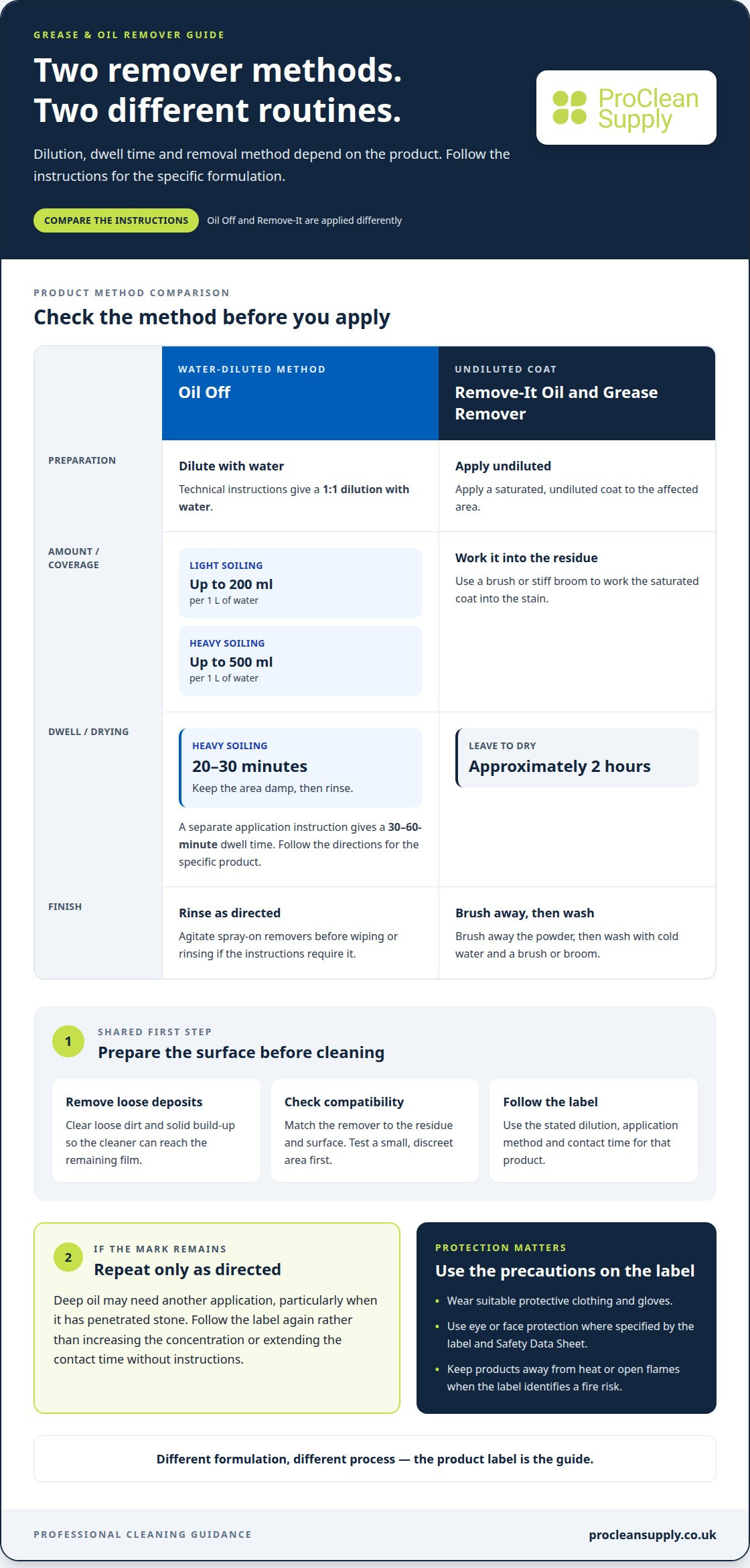
For Oil Off, the technical instructions give a 1:1 dilution with water. For light soiling, use up to 200 ml per 1 L of water; for heavy soiling, use up to 500 ml per 1 L. Keep heavily soiled areas damp and allow 20-30 minutes before rinsing. A separate application instruction gives a 30-60-minute dwell time, so follow the directions for the specific product.
Test a small, discreet area first. Check for colour change or loss of shine, particularly on painted finishes, plastics and polished surfaces, where an unsuitable cleaner may dull, discolour or damage the material. Keep degreasers off skin and wear suitable protective clothing and gloves.
Some removers use a different method. Apply Remove-It Oil and Grease Remover as a saturated, undiluted coat, then work it in with a brush or stiff broom. Leave it to dry for approximately 2 hours; brush away the powder, then wash with cold water and a brush or broom.
Some product labels warn that formulations can cause severe skin burns and eye damage, or be harmful if swallowed. Wear protective gloves, clothing and eye or face protection as specified in the label and Safety Data Sheet. Keep products away from heat or open flames when the label identifies a fire risk.
If the stain remains, repeat the treatment as directed. A second application may be needed when oil has penetrated deeply into stone. Follow the label again rather than increasing the concentration or extending contact time without instructions.
Cleaning oily equipment, tools and vehicles
First identify the material and residue. Fresh oil on a metal spanner needs a different approach from grease packed around a machine joint. Switch off equipment before cleaning and keep spray away from electrical connections. Remove loose, heavy deposits first so the cleaner can reach the remaining film.
Food Standards Scotland describes detergents as chemicals used to dissolve grease and remove dirt and soil. UK Government guidance says alkaline detergents containing wetting agents are normally used for organic material, including oils and grease. This makes them relevant to oily equipment, but the product label must still match the surface and task.
Apply the selected cleaner to the affected area, then agitate with a brush or cloth suited to the component. A stiff-bristled brush can reach textured metal, while a softer brush helps limit abrasion on painted panels. Leave the product for the label’s stated contact time. Rinse or wipe away loosened soil, then check crevices and joints for residue.
For vehicle bodywork, wheels and painted equipment, test a small area first. Strong or unsuitable chemistry can affect paint, plastics, rubber and protective finishes. Do not let the cleaner dry on the surface unless its instructions specify a drying method. Clean one manageable area at a time, especially on large vehicles in warm or windy conditions.
Dispose of used degreaser and oily wash water responsibly. Do not pour them down drains. Keep collected liquid, oily cloths and scraped residue contained, and follow the product label and applicable waste-disposal instructions.
For workshop or fleet maintenance, a suitable solvent degreaser can help tackle persistent oily deposits. Select it for the material and contamination, rather than assuming one formulation suits every tool or vehicle.
Oil and grease stain removal from driveways and patios
Oil on a driveway needs a treatment made for exterior paving. First identify the surface: concrete, block paving and tarmac can react differently. Choose a remover whose label covers that material, then test a discreet patch. This is especially important on tarmac, where an unsuitable product may affect the surface.
For fresh spills, absorb excess oil before applying cleaner. Avoid spreading it across clean paving as you wipe. For older marks, remove loose dirt and scrape away solid deposits where possible. Apply the treatment to the stain and work it in with a stiff-bristled brush, following the product’s dilution and contact-time instructions.
After treatment, scrub the patch with clean, warm water or rinse it with a power washer. Prevent wash water from carrying loosened oil across the drive. If a stain remains, repeat the product’s stated process rather than increasing its concentration. Deep oil can remain within porous stone, so one surface treatment may not remove every trace.
Grease and oil removers vary in price across the UK. Cost depends on factors such as container size, concentration and intended use. Compare the label’s dilution directions and suitability for your paving, rather than judging a product by pack size alone.
Clothing and upholstery need fabric-specific treatment, not paving cleaner. Use a laundry stain remover or upholstery cleaner labelled for the material, and follow its care instructions. Blot excess oil instead of rubbing it deeper into the fibres. Test a hidden area first, then treat the mark before laundering or cleaning the full item.
Keep the task surface-specific. A paving treatment may suit an outdoor stain but not fabric, vehicle paint or plastic. For driveway and patio work, choose a product labelled for the paving type, including tarmac, and follow its application and rinsing directions.
What types of grease and oil removers are available in the UK?
UK buyers can choose from solvent-based, water-based and biodegradable degreasers, as well as specialist paving treatments. The right type depends on the residue, surface and cleaning method. A workshop tool, vehicle panel and patio stain each have different compatibility and rinsing requirements.
Solvent-based cleaners target oily deposits that resist water-based cleaning. They may suit metal components and machinery, but can affect paint, plastics or rubber. Water-based degreasers use water as their carrier and may suit routine cleaning where rinsing is practical. Check the label before applying either type to a finished surface.
- Concentrated degreasers: diluted according to soil level and label directions, for adaptable cleaning tasks.
- Ready-to-use sprays: applied directly to localised grease on suitable tools or equipment.
- Paving treatments: formulated for outdoor oil marks on specified materials, including some tarmac products.
Biodegradable formulations are designed to break down more readily. That does not mean a product is harmless or suitable for every surface. Follow its handling instructions and keep chemical residues out of drains. For oily equipment, an alkaline detergent containing wetting agents can help remove organic material, including grease and oils, according to UK Government guidance.
Match the format to the job. A spray can be practical for a small, accessible mark; a concentrate can suit repeated cleaning when dilution is controlled. For paving, choose a treatment whose directions cover the surface, then follow its application and removal instructions. Never assume a general-purpose cleaner is suitable for tarmac, vehicle paint or upholstery.
Compare labels for intended use, dilution guidance, contact time and compatible materials. These details matter more than broad claims such as “heavy duty”. If solvent-based chemistry fits the residue and surface, browse solvent degreasers for a suitable cleaning option.
Pro Clean Supply
Pro Clean Supply helps UK buyers match cleaning products to the surface and task. Its range includes vehicle and facility care products, patio and driveway cleaning solutions, and degreasers and hard surface cleaners. These categories help address oily equipment, vehicle cleaning and outdoor paving without treating every stain or material alike.
For fabric care, the range also includes laundry and carpet cleaning chemicals. Check each product’s directions for suitable materials, dilution and application before use. Surface compatibility and the type of soiling remain central to choosing an appropriate cleaner.
Contact Pro Clean Supply to discuss cleaning products for your task.
Build the right cleaner into your routine
Make product selection part of the cleaning procedure, not an afterthought. Record the surface, type of soiling and cleaning method for each task. This gives staff a consistent basis for choosing grease and oil removers and following the relevant product directions.
Pro Clean Supply’s wider range includes BAC 50 - Benzalkonium Chloride 50% Professional Biocide, Catering & Hospitality Cleaning Products, and Laundry & Carpet Cleaning Chemicals. These offerings support different cleaning requirements, from hygiene routines to fabric care, alongside the vehicle, facility and hard-surface products relevant to oily deposits.
Keep the intended use clear when selecting a product. A cleaner suited to a workshop floor may not suit painted equipment or paving. For a next step, explore solvent degreasers and consider whether that product type fits your cleaning task. A well-matched choice helps make routine cleaning more controlled and consistent.
Frequently Asked Questions
Can I use this on tarmac?
Yes, if the remover’s label says it is suitable for tarmac. Test a discreet patch first and check for softening, colour change or surface damage before treating the stain. Keep the application within the stated contact time, then remove it as directed. Do not assume a cleaner intended for concrete or block paving is suitable for tarmac.
Will this work on BBQ grease?
A degreaser may remove BBQ grease from suitable metal parts, but use it only if the product is labelled for that surface and purpose. Do not apply it to a hot barbecue. For cooking surfaces or components that contact food, use a cleaner only where its label permits and follow the stated rinsing instructions before using the barbecue again.
What are grease and oil removers, and how do they work?
Grease & oil removers are cleaning products formulated to loosen oily or greasy soil so it can be wiped, brushed or rinsed away. Some use detergents to help separate grease from a surface; solvent-based formulations work differently. Food Standards Scotland describes detergents as chemicals used to dissolve grease and remove dirt. Choose according to the residue and material, not just the product category.
Which grease and oil removers work best on engines, tools and machinery?
Choose a degreaser labelled for the equipment’s materials and type of contamination. A product for metal tools may not suit painted engine covers, rubber hoses or plastic housings. For engine bays, avoid spraying electrical connections, sensors and air intakes. Apply the cleaner to an accessible area, then remove loosened residue as the product instructions specify.
What is the best way to remove oil and grease from concrete and driveways?
Use a paving treatment labelled for the driveway material. For concrete, apply it to the affected patch and follow its directions for contact time and removal. A pressure washer can help rinse residue, but control the spray to avoid spreading oily wash water. For block paving, consider whether the treatment could affect jointing material or nearby plants.
How to use a grease and oil remover safely and effectively?
Read the current product label and Safety Data Sheet before use. Wear protective gloves, clothing and eye or face protection as specified. Do not mix cleaners unless the manufacturer expressly instructs you to do so. Apply grease & oil removers only to a permitted surface, observe the stated dilution and contact time, and keep the product in its labelled container after use.