

Graffiti remover for bare brickwork
For bare brick, choose a graffiti remover for brickwork formulated for porous masonry, rather than a standard paint stripper or household cleaner. Brick pores and uneven texture can trap paint and dye, making graffiti harder to remove than from smooth surfaces. Prepare the area, follow the product label and work carefully to avoid damaging the brick or mortar.
Removing visible paint is only part of the job. Residue may remain within the surface, while aggressive scrubbing or rinsing can cause damage. The right approach depends on the brick’s condition, the graffiti type and how deeply the colour has penetrated.
This guide explains why bare brick holds graffiti, how to protect the surrounding area and how to treat paint caught in textured faces and mortar joints. It also covers what to look for in a specialist remover, helping you choose a suitable product and work carefully.
Key Takeaways
- Brick’s pores and uneven texture can trap paint and dye, so removal may take more care than on a smooth surface.
- Before treatment, protect nearby windows, plants and surfaces, and use suitable protective equipment.
- Follow the remover’s label, work it into textured areas with a soft-bristled brush, and rinse gently to protect the masonry.
- Choose a product intended for bare brick; unsuitable cleaners or paint strippers can leave stains, rough patches or discolouration.
Why brick’s porous surface makes graffiti difficult to remove
Bare brick is harder to clean than smooth surfaces such as glass or metal. Its pores and uneven face allow paint and dyes to penetrate and cling to the surface. Spray paint can also settle in mortar joints, leaving colour beneath the brick’s outer texture. A suitable graffiti remover for brickwork must work into the masonry, not just lift paint from its face.
Professional removal costs depend on the affected area, access, graffiti type, depth of penetration and treatment required. These factors determine the labour and materials involved, so the brick’s extent and condition matter more than a simple surface-area estimate.
Pressure washing can damage brick and mortar if the pressure or water volume is excessive. According to UK Government, this can erode masonry, wash out pointing, cause staining and force water into the wall’s core. Rinse treated brick carefully with low pressure and controlled water, rather than directing a forceful jet at joints.
Removal methods vary by surface. A method suited to non-porous glass may not lift paint embedded in rough brick, so match the remover to the material. Follow the label for application and rinsing, then inspect the wall in good light. If paint remains in a textured face or joint, repeat the treatment as directed rather than switching to abrasive tools.
Even after visible paint is removed, faint outlines can remain in porous masonry. This is known as ghosting. Graffiti Ghosting Remover is intended to remove faint outlines from porous surfaces after a graffiti remover has been used. Treating the outline separately targets residue left behind by the initial cleaning.
Free council removal or grants are not available as a uniform option that property owners can assume. Any assistance depends on the relevant council’s local arrangements, so check its policy for the property and location. For privately owned bare brick, assess the work based on the surface condition and removal method.
Protective equipment and preparing the work area
Before applying a remover, read its label and safety data sheet, then plan how to protect people, nearby surfaces and the original brick finish.
Protective Equipment and Safety
Wear gloves, safety glasses and protective clothing when handling graffiti removal products. Follow the product label and safety data sheet for handling, application and first aid. Keep the container identified and follow its storage directions. This helps you match protection to the chemical being used instead of assuming every remover presents the same risks.
Preparing the Work Area
Cover nearby windows, plants and surfaces before treatment. For example, use suitable sheeting to shield a window below the graffiti, and protect planting beds from splashes and run-off. Keep containers and used materials clear of the cleaning zone. Decide how to contain wash water before applying the product, not once rinsing has begun.
UK controls depend on the product and how its wastewater is handled. Follow the label and safety data sheet, contain run-off and avoid releasing chemical wash water uncontrolled. These documents provide handling and disposal guidance for the specific remover.
For future graffiti protection, consider whether a suitable anti-graffiti coating is right for the wall. A coating can change the brick’s appearance, so compare its finish with the original surface and test a discreet area first. Check compatibility with the masonry and follow the coating maker’s application instructions. On a prominent frontage, compare the treated patch in daylight before extending coverage.
Protection also depends on how the wall is maintained. Record the coating used and its application instructions, then retain them with the property’s maintenance information. This gives whoever treats later tagging a clear reference point and helps avoid applying an incompatible product. For broader site-cleaning requirements, explore professional cleaning supplies suited to different surfaces.
Removing spray paint from mortar joints and textured brick
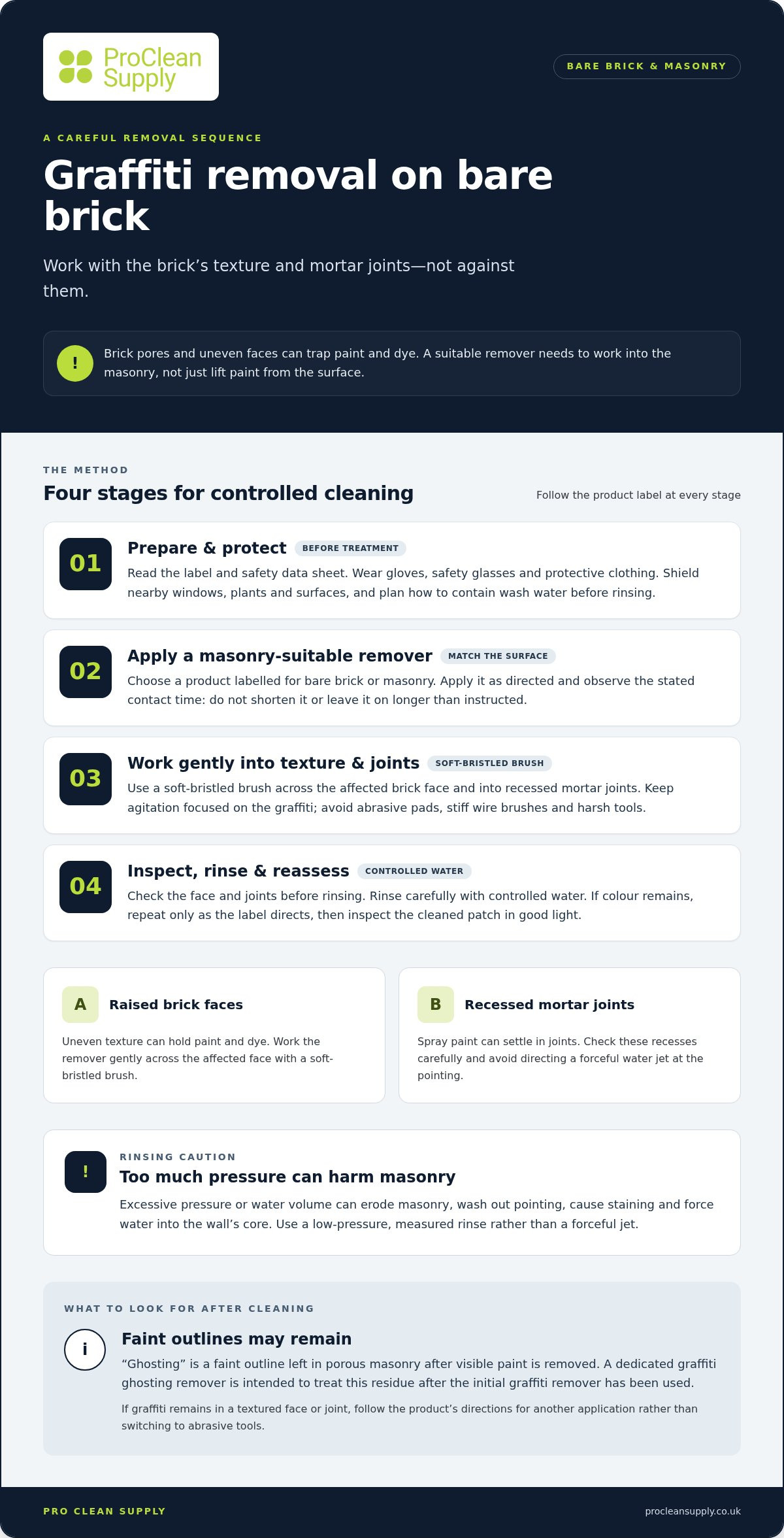
First identify where paint has collected: on raised brick faces, in recessed joints or both. Apply a remover intended for masonry, following the label for application and contact time. The stated period allows the product to penetrate the surface and lift paint or ink. Do not shorten it or leave the product on longer than directed.
Textured brick needs careful, controlled agitation. Use a soft-bristled brush to work the remover across the uneven face and into mortar joints. Focus on the affected areas rather than scrubbing widely across clean brick. Avoid abrasive pads, stiff wire brushes and harsh tools that could damage the brick or pointing.
Check the treated area before rinsing. If spray paint remains in a joint or textured recess, follow the label’s instructions for another application. Old or deeply embedded graffiti may need repeated treatment. Reapply only as directed, and inspect both the brick face and mortar line to catch any remaining colour.
Rinse with controlled water. If using a pressure washer, keep its pressure low and avoid directing a forceful jet into mortar joints. According to UK Government, high pressure or excessive water can erode masonry, wash out pointing, cause staining and force water into the wall’s core. A measured rinse helps limit these risks.
After rinsing, inspect the surface in good light, including recessed joints where residue can be harder to see. Compare the cleaned patch with adjacent brick before treating more of the wall. Use the same approach on concrete only if the remover’s label identifies it as a suitable surface. Follow the stated method, contact time and rinsing instructions for each material.
Choosing a specialist graffiti remover for bare brick
Choose a remover labelled for bare brick or masonry, not one intended only for smooth surfaces. Brick absorbs liquid, while its texture and mortar joints can retain paint below the visible surface. The product should suit both the substrate and graffiti type, with clear directions for application, contact time and rinsing.
A standard paint stripper or household cleaner may seem convenient, but it can damage brick and leave stains, rough spots or discolouration. Match the remover to the material and test it on a discreet patch. After rinsing and drying, compare the treated area’s colour and texture with the surrounding wall.
Before selecting a product, assess these points:
- Surface: confirm the label includes bare brick or masonry, rather than relying on a general paint-removal claim.
- Graffiti: consider whether the mark is spray paint, ink or a faint outline left after cleaning.
- Application: look for usable instructions covering dwell time, brushing and rinsing.
- Finish: test whether treatment changes the brick’s colour or surface appearance.
For a wall with residual outlines, treat the main paint removal and ghosting as separate stages. A specialist ghosting remover is intended for faint outlines on porous surfaces after graffiti remover has been used. This staged approach targets remaining residue without substituting an unsuitable general cleaner.
Read the product label and safety data sheet before use. Check the specified surfaces, application method, protective equipment and disposal guidance. A product suited to brick should also give practical directions for textured areas. Do not choose by strength alone: compatibility and controlled application matter when preserving masonry.
For related site-cleaning requirements, browse professional cleaning supplies and identify products suited to your other cleaning tasks.
Pro Clean Supply: BAC 50 - Benzalkonium Chloride 50% Professional Biocide
Pro Clean Supply’s BAC 50 - Benzalkonium Chloride 50% Professional Biocide is a biocide for professional cleaning requirements, not a graffiti paint remover. Keep brick graffiti treatment separate: use a product intended for masonry, following its label and safety instructions. Turn to BAC 50 where a professional biocide is relevant to a separate cleaning task, rather than applying it to remove paint from bare brick.
This distinction helps match the product to the job. Graffiti removal requires a remover suited to porous masonry; biocidal cleaning addresses a different need. For other cleaning requirements, Pro Clean Supply also offers products for catering and hospitality, laundry and carpet care, and vehicle and facility care.
Contact Pro Clean Supply to discuss its professional cleaning products.
Plan the next step for your site
Before treating another affected area, record the brick type, finish and product used. This creates a practical reference for future maintenance and helps keep treatment choices consistent. Choosing a graffiti remover for brickwork is a task-specific decision, so keep it separate from other cleaning requirements around the site.
For those separate requirements, Pro Clean Supply offers BAC 50 - Benzalkonium Chloride 50% Professional Biocide, Catering & Hospitality Cleaning Products, and Laundry & Carpet Cleaning Chemicals. These products serve distinct cleaning needs and shouldn’t be treated as graffiti removers. A clear distinction helps you choose products according to the task rather than the setting alone.
For information about Pro Clean Supply’s cleaning products, contact Pro Clean Supply for advice. With a defined treatment plan and suitable products for each job, you can approach site maintenance with greater clarity.
Frequently Asked Questions
What graffiti removers are suitable for brickwork in the UK?
Use a remover specifically intended for bare brick or masonry, with directions for application and rinsing on porous surfaces. Brick absorbs liquids, so a product designed only for smooth materials may not be suitable. Avoid standard paint strippers and household cleaners, which can stain or discolour brick. For listed buildings or fragile historic brick, assess the material carefully before treatment.
How do I choose a graffiti remover for porous brick and mortar?
Choose a product based on the substrate and graffiti type. Check that the label names brick or masonry and gives instructions for textured faces and mortar joints. For example, spray paint lodged in recessed pointing needs a remover and application method suited to those areas. Test a discreet patch first, then inspect the dried brick for changes in colour or finish before treating a larger section.
What are the best graffiti removal products for brickwork in the UK?
A specialist masonry graffiti remover is more suitable than a general-purpose cleaner or paint stripper. Compare products by their stated surface compatibility, application instructions and rinsing method, not strength alone. If faint outlines remain after the main paint is removed, use a product intended for ghosting on porous surfaces. Follow each label for the wall and residue being treated.
How do I remove spray paint from brickwork step by step?
First, read the remover’s label and prepare a discreet test patch. Apply the product as directed and allow the stated contact time. Work it into textured areas with a soft-bristled brush, including painted mortar lines. Rinse as instructed, using controlled water. Inspect the dried patch; if paint remains, repeat only as the label directs. Avoid abrasive tools that could damage the surface.
How long should graffiti remover be left on brick before rinsing?
Leave the remover on for the contact time stated on its label. No single duration suits every product and brick surface, so do not guess the timing. The specified period allows the formulation to act on paint or ink. Rinse as directed, and follow the label if residue remains or another application is needed.
What safety precautions and PPE are needed when using graffiti remover?
Wear gloves, safety glasses and protective clothing, and read the product label and safety data sheet before starting. Protect nearby windows, plants and surfaces from splashes or run-off. For example, shield a planted border below the treated wall and keep other people clear of the work area. Follow the manufacturer’s handling, application and disposal instructions for the specific product.