

Glass Wash Detergent for Pub Glassware and Glasswasher Care
A clear glass isn’t necessarily a clean one. For pubs, effective glass wash detergent must suit the glasswasher and be paired with rinse aid appropriate for the water hardness. Don’t mix chemical brands. Bubbles clinging inside a lager glass can indicate residue, while wiping the inside with a damp white napkin can reveal protein build-up.
When glasses look cloudy, show water marks or lose beer head, detergent may seem the obvious culprit. But dosing, rinse pressure, water minerals or machine maintenance could also be responsible. Adding more rinse aid won’t fix poor head retention, and drying glasses with tea towels can leave an oily film.
This guide explains how to spot ineffective glass cleaning, adjust detergent in line with soil levels and care for a commercial glasswasher. It also covers what to consider when choosing glass wash detergent for pubs, from glassware and machine type to water conditions. The practical approach is to identify the likely cause, then take the appropriate cleaning or maintenance step.
Key Takeaways
- Look for signs such as clinging bubbles, cloudy glass or protein residue to identify cleaning problems and narrow down their cause.
- Use detergent and rinse aid that are compatible and suited to your water hardness, and keep chemical containers from running dry.
- Match detergent dosing to the level of soil; heavily soiled or tired glassware may need periodic renovation using the product instructions.
- Maintain the glasswasher, water-treatment equipment and dosing components routinely to support consistent cleaning.
- Choose detergent for the glassware, automatic machine and venue’s water conditions rather than relying on a one-size-fits-all option.
Glasswasher cleaning and maintenance
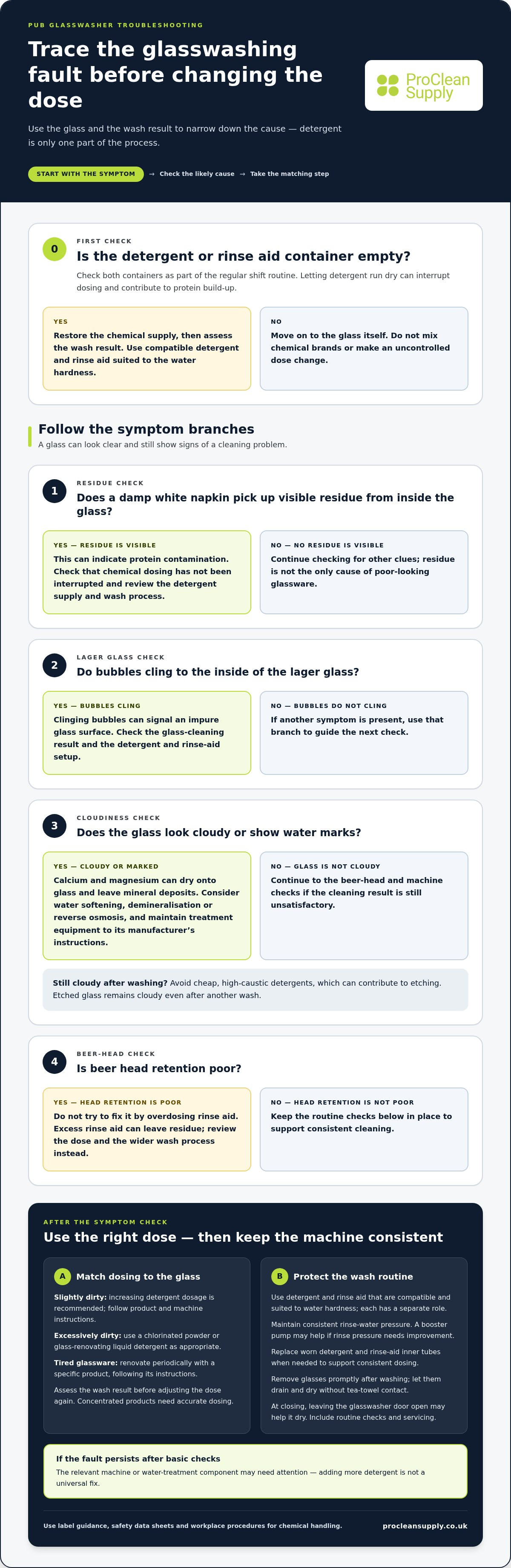
Effective glass cleaning depends on more than detergent. Use a compatible rinse aid suited to your water hardness, and don’t mix chemical brands. Keep the detergent container from running dry, as interrupted dosing can contribute to protein build-up on pub glassware. Check both containers as part of the regular shift routine, rather than waiting for a washing problem to arise.
Check the glass itself, not just how it looks in the rack. Wipe the inside of a supposedly clean glass with a damp white napkin. Visible residue can indicate protein contamination. Bubbles clinging inside a lager glass can also signal an impure surface. Cloudiness may have a different cause: calcium and magnesium can dry onto glass and leave mineral deposits.
Let the symptom guide your next step. For mineral clouding, water softening, demineralisation or reverse osmosis may help. Maintain any water-treatment unit according to its manufacturer’s instructions. Poor beer head retention is not a reason to overdose rinse aid. Excess can leave residue, so review the dosing and wider wash process instead of making an uncontrolled adjustment.
- Protect the glass surface: remove glasses from the machine as soon as possible after washing. Avoid cheap, high-caustic detergents, which can contribute to etching. Etched glass stays cloudy even after another wash.
- Avoid recontamination: don’t dry pub glasses with tea towels. They can leave an oily film on the glass. Allow washed glasses to drain and dry without towel contact.
- Maintain dosing: replace consumable parts, including detergent and rinse aid inner tubes, when needed. Worn tubes can disrupt consistent chemical dosing.
- Check the rinse: maintain adequate, consistent rinse-water pressure. A booster pump may help if the machine’s rinse pressure needs improvement.
At closing, leaving the glasswasher door open may help it dry. Include this in the closing routine, alongside regular checks. Routine checks and servicing can prolong a commercial glasswasher’s lifespan and help it operate efficiently. These steps address different potential causes, from chemical supply and water quality to rinse performance, glass handling and machine condition. If a fault persists after basic checks, the relevant machine or water-treatment component may need attention, rather than more detergent.
Prompt removal and towel-free drying go together: take glasses out of the machine as soon as possible and let them dry without tea-towel contact, since towels can leave an oily film. Detergent choice also affects the glass surface. Avoid cheap, high-caustic products to help prevent etching. If beer head retention is poor, don’t try to fix it by overdosing rinse aid.
Detergent dosing and glass renovation
Good results depend on matching detergent dosing and water treatment to the condition of the glassware. Start with the machine and product instructions, then assess the wash result.
Detergent and rinse aid differences
Detergent cleans soil from glass surfaces during the wash cycle. Rinse aid supports the rinse stage by helping water drain from glassware. They have separate roles, so one cannot replace the other. Use compatible products and follow the dosing guidance on each label.
For COSHH and food hygiene controls, follow the product label, safety data sheet and workplace procedures. Keep containers identified, closed and away from food and clean glassware. Train staff to use the correct chemical and never transfer it into an unlabelled container.
Detergents for hard and soft water
Choose detergent and rinse aid to suit the pub’s water conditions, rather than assuming one formulation works everywhere. Hard water can leave mineral deposits as calcium and magnesium dry on glass. Water softening or other treatment may help. Assess the treated water before changing chemical dosing.
Which glasswash detergents work best in hard or soft water? Choose a compatible detergent and rinse aid suited to the venue’s water hardness. Follow the manufacturer’s guidance, and don’t try to compensate for mineral deposits by increasing detergent without first checking the cause.
For slightly dirty glasses, increasing the detergent dosage is recommended. Make changes in line with the product and machine instructions, then assess the wash result before adjusting again.
Concentrated and eco-friendly options
Are concentrated or eco-friendly glasswash detergents available for pubs? These options are available, but suitability depends on the machine, glassware, water conditions and label instructions. Concentrated products need accurate dosing. Using excess chemical won’t make a wash more effective.
Compare product directions and intended use, including whether the detergent is designed for automatic glasswashing. For excessively dirty glasses, use a chlorinated powder or glass-renovating liquid detergent as appropriate. Renovate glassware periodically with a specific renovation product, following its manufacturer’s instructions.
Costs, suppliers and dispenser systems
What do glasswash detergents for pubs cost in the UK? There is no single price across all products. Pack size, concentration and dosing requirements affect value for a venue. Compare the amount used per wash, not just the container price.
Where can UK pubs buy glasswash detergent, and are dispenser systems available? Commercial cleaning suppliers provide detergents for automatic glasswashers, while dispenser arrangements depend on the product and machine setup. Check compatibility and dosing instructions before selecting a system. For a wider view of commercial cleaning supplies, consider the cleaning products used across your hospitality operation.
Glassware and venues suited to the detergent
Choose detergent for the washing method and glassware used each day. Glasswash detergent is intended for automatic glasswashing, not as a general substitute for hand-washing products. The category includes glasses and tumblers, such as pub glassware for beer, spirits and soft drinks. Before use, check the label and machine instructions to ensure the detergent suits the equipment.
A pub serving several types of drinks may handle different glass shapes and sizes throughout a shift. Pint glasses, stemmed glasses and tumblers need to fit the machine’s racks and wash chamber correctly. Before choosing a detergent, list the glassware that goes through the glasswasher and note any special care instructions. This gives staff a practical basis for selecting a product and loading glasses consistently.
Match the product to the venue’s washing routine
A traditional pub with a dedicated glasswasher needs a product designed for automatic glasswashing. A bar in a restaurant or hotel may process tumblers and drink glasses as part of a wider hospitality cleaning routine. In either setting, the detergent must suit the glasswasher, glassware and venue’s operating instructions. Don’t assume a product for automatic machines is suitable for manual washing.
Consider how the venue’s service pattern affects glasswashing. A busy bar may run repeated racks during service, while a smaller venue may wash in fewer batches. Either way, operators need a clear routine for loading, dosing and replenishing detergent. Staff should follow product directions consistently, rather than changing products or quantities simply because one shift handles more glasses.
- Identify the machine: confirm that the detergent is intended for an automatic glasswasher.
- Review the glassware: include glasses and tumblers used across the drinks menu.
- Check handling instructions: follow the glassware and machine manufacturers’ guidance for loading and washing.
- Standardise staff practice: keep product directions accessible wherever the glasswasher is operated.
A pub’s name or size doesn’t determine which detergent is suitable. The key factors are the automatic machine, the glassware it processes and the product’s stated use. For example, a detergent intended for glasses and tumblers in an automatic glasswashing machine suits that application. It must still be used according to its label and the machine’s operating instructions. Assess products against actual service needs, not packaging language alone.
What types of glasswash detergent are used in pubs in the UK?
UK pubs use detergents intended for glasses and tumblers in automatic glasswashing machines. The right type depends on the machine, water conditions and soil on the glassware. For routine washing, choose a product labelled for automatic glasswashing and follow the manufacturer’s instructions. A product for another cleaning task isn’t automatically suitable for pub glasses.
For heavily soiled glassware, you may need a glass-renovation product instead of routine detergent. Chlorinated powder or glass-renovating liquid detergent can be used for excessively dirty pub glasses. These products address a different need from everyday machine washing. Follow the specific product’s directions, including its application method and any dosing instructions.
Product form alone doesn’t determine suitability. A powder, liquid or concentrated formulation still needs to match the glasswasher and the task. Check the label for intended use, then compare it with the machine instructions and the condition of the glasses. For example, routine residue calls for a review of the normal wash process, while heavily soiled glassware may need renovation.
- Automatic glasswash detergent: for routine washing of glasses and tumblers in an automatic glasswashing machine.
- Chlorinated powder: an option for excessively dirty pub glassware, used as directed.
- Glass-renovating liquid detergent: another option for excessively dirty glasses, following the manufacturer’s instructions.
Renovation is a periodic treatment, not a substitute for regular washing. Use a specific glass-renovating product and follow its instructions. After treatment, assess the glassware and return it to the normal machine-washing routine. This helps distinguish ordinary soil from glassware that needs a dedicated renovation step.
Choose glass wash detergent for pubs by matching the product to the glasswasher and the condition of the glassware. Don’t choose a product simply because it sounds stronger, in the hope of correcting an unknown problem. An empty detergent container, unsuitable water conditions or inconsistent dosing can affect results. Identify the issue first, then select the relevant product category and follow its directions.
Keep staff instructions practical: name the routine detergent, identify the renovation product separately and explain when each is used. For example, staff can follow the glasswasher’s routine instructions during service and reserve a glass-renovating product for periodic treatment of heavily soiled glassware. Consistent product selection makes the wash process clearer across shifts.
Choose an automatic glasswash detergent suited to the water conditions and glasswasher, ensuring you match the formulation to your local water hardness profile for optimal results.
What is the difference between glasswash detergent and glass rinse aid?
Glasswash detergent and rinse aid perform separate jobs in an automatic glasswasher. Detergent cleans soil from glass surfaces during the wash stage. Rinse aid helps water drain from glasses during rinsing. A pub needs both functions, using products compatible with each other and the machine.
Consider a beer glass with dried drink residue. Detergent is designed to remove soil during washing; rinse aid doesn’t replace that cleaning action. If glasses remain dirty, check the detergent supply, dosing and wash process. If water does not drain well, assess the rinse stage and rinse-aid delivery instead.
Compatibility matters. Use rinse aid suited to the venue’s water hardness alongside a compatible detergent, and don’t mix chemical brands. Product labels and glasswasher instructions guide product selection and dosing. Changing one chemical without considering the other can disrupt the wash process, so adjust methodically and observe the result on clean, dry glassware.
- Detergent: targets soil on glasses during the wash cycle.
- Rinse aid: supports water drainage during rinsing.
- Compatibility: pair products designed to work together and follow their instructions.
- Dosing: keep detergent and rinse-aid containers supplied, and avoid uncontrolled changes.
Poor beer head retention needs careful diagnosis. Excess rinse aid is not the solution, as overdosing can worsen glass conditions. Check whether the glass is clean, detergent dosing is consistent and the rinse stage is working correctly. Wiping the inside with a damp white napkin can reveal protein residue, while clinging bubbles may indicate an impure surface. These checks help distinguish cleaning issues from rinse problems.
Water hardness also affects rinse-aid choice. Minerals such as calcium and magnesium can dry on glass and cause cloudiness. In that case, consider water conditions and treatment instead of simply adding more rinse aid. Keep chemical containers, dosing components and machine instructions in view during routine checks. This helps staff spot an empty container or inconsistent feed.
For a pub’s chemical routine, record which detergent and rinse aid are paired, their intended application and the correct dosing guidance. Staff can then follow the same process across shifts and identify changes when results vary. To review commercial cleaning products for hospitality operations, use the product category that matches your cleaning requirements.
Pro Clean Supply: BAC 50 - Benzalkonium Chloride 50% Professional Biocide
Pro Clean Supply offers BAC 50 - Benzalkonium Chloride 50% Professional Biocide and Catering & Hospitality Cleaning Products for wider venue cleaning requirements. BAC 50 is a professional biocide, not glasswash detergent or rinse aid, so it doesn’t replace the chemicals used in an automatic glasswasher.
For pub operators reviewing cleaning supplies beyond glassware, Pro Clean Supply’s catering and hospitality products are a relevant next step. Match each product to its intended cleaning task and follow its product information. This keeps glasswashing chemicals distinct from products chosen for other venue requirements.
Visit Pro Clean Supply to explore its professional cleaning products.
Set a consistent cleaning standard for your venue
Make product selection part of how your team manages cleaning supplies. Keep glasswasher chemicals separate from products intended for other tasks, and give staff straightforward instructions for using each one. This creates a more consistent routine across shifts and helps prevent products being used outside their intended application.
Pro Clean Supply offers Catering & Hospitality Cleaning Products, Laundry & Carpet Cleaning Chemicals, and BAC 50 - Benzalkonium Chloride 50% Professional Biocide. These products serve different cleaning requirements; BAC 50 is a professional biocide, not glasswash detergent. For a suitable next step, discuss the products relevant to your venue’s cleaning needs.
For guidance on detergent selection, contact Pro Clean Supply. A considered choice of glass wash detergent for pubs can support a clear, repeatable process for your team. Move forward with product information that matches your operational requirements and keep your cleaning routine organised.
Frequently Asked Questions
What Are the Signs of Ineffective Glass Cleaning?
Look for persistent haze, visible residue, water marks or glasses that still feel unclean after washing. A glass that looks clear under bar lights may show a dull film against a darker background. Distinguish removable soil from etching: if cloudiness remains after another correctly run wash, the glass surface may be damaged rather than dirty. Check several glasses from different racks to see whether the issue is isolated or recurring.
What Can You Do to Maintain Performance and Keep Glasses Sparkling?
Give staff a repeatable opening and closing routine. Check chemical levels, inspect the rack and wash chamber for debris, and record recurring faults to help trace changes across shifts. Remove clean glasses promptly and let them air-dry rather than polishing them with tea towels. If a problem persists after routine checks, note when it occurs and which rack or cycle was involved.
How to choose detergent for a pub glasswasher and different glass types?
Choose a detergent labelled for automatic glasswashing, then compare its instructions with the glasswasher and glassware guidance. Include every shape used in service, such as tumblers and stemmed glasses, and make sure each fits the rack without touching neighbouring items. For delicate or specially decorated glassware, follow its care instructions rather than assuming a standard machine cycle is suitable. Keep the chosen product and handling procedure consistent across shifts.
How much glasswash detergent should a pub use per wash?
Use the dosage stated by the detergent manufacturer and follow the glasswasher’s operating instructions; there is no universal dose for every machine and water condition. For slightly dirty glasses, increasing detergent dosage is recommended, but make adjustments in line with product guidance. Don’t estimate by pouring extra into the machine. Keep the container from running dry and assess the next wash before making another change.
How can pubs prevent cloudy glasses, streaks and beer foam problems?
First identify whether the issue is mineral deposits, detergent residue, poor drainage or surface damage. Cloudiness as water dries can result from calcium or magnesium, and water treatment may help. For streaks, review chemical dosing and drying practice. If beer head retention is poor, don’t overdose rinse aid. Compare clean glasses and check whether the problem affects one glass type or the whole rack.