

Choosing a Fabric Protector Spray for Your Upholstery
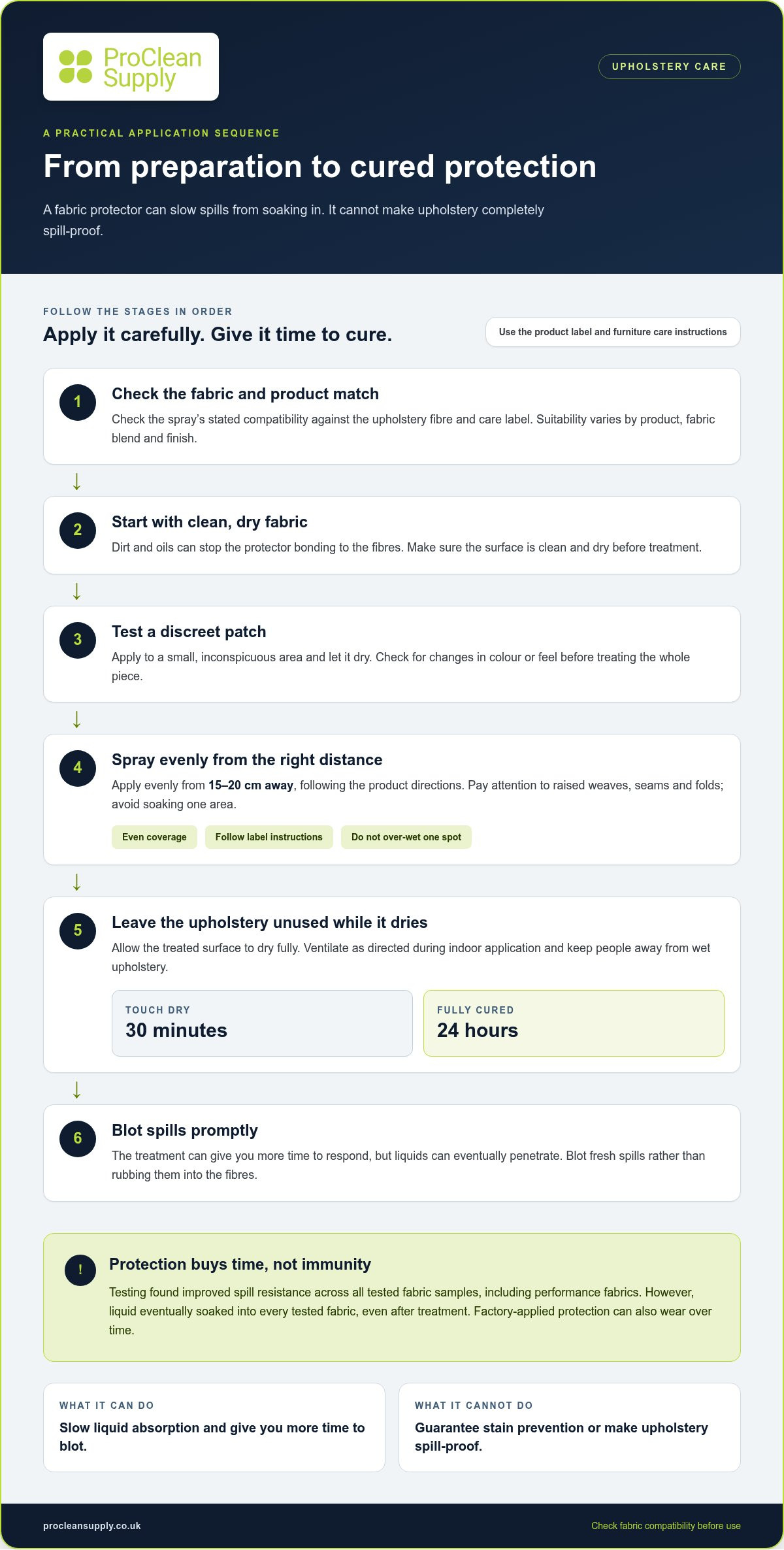
Protection buys time, not immunity. A fabric protector spray for upholstery can help spills stay on the surface longer, giving you more time to blot them away, but it won’t make furniture completely spill-proof. Apply it to clean, dry fabric from 15-20 cm away.
Before treating a sofa, chair or other upholstered surface, compare products carefully. The fabric type, texture and spray’s stated compatibility all matter, so choose a protector suited to the material.
This guide explains how protector sprays repel spills, which upholstery fabrics they suit and what to compare when choosing one. You’ll also learn why application matters, where protection has limits and how to make a practical choice for your furniture.
Key Takeaways
- Match the protector to the upholstery fibre and the product’s stated uses; suitability can vary across materials.
- Consider fabric texture when assessing spill risk, as liquid can behave differently on textured and smoother surfaces.
- Compare application instructions, finish and coverage to find a product that fits the furniture and the area you need to treat.
- Existing factory-applied protection can wear away, so factor the fabric’s condition into your care plan.
Does Fabric Protector Really Work?
A protector spray can slow spills from soaking in, but it cannot make upholstery spill-proof. Preparation, fabric compatibility and drying time all affect the result.
Spray-Applied Protection
Start with clean, dry fabric: dirt and oils can stop protector bonding to the fibres. Apply evenly from 15-20 cm away, following the product label and upholstery care instructions. The spray is touch dry in 30 minutes and fully cured in 24 hours. Keep furniture unused during curing so the treated surface can dry fully.
| Option | Preparation | Protection | Drying |
|---|---|---|---|
| Spray-applied | Clean, dry fabric | Can delay spills soaking in | 30 minutes touch dry; 24 hours to cure |
| Factory-applied | Applied during manufacture | Not permanent | Varies by furniture |
Stain Prevention
Protection creates a barrier, not a guarantee against stains. Liquids can eventually penetrate treated upholstery, so a fabric protector spray for upholstery gives you time to respond rather than preventing every mark. Factory-applied protection on new sofas and carpets also wears over time, so don’t assume new furniture is permanently protected. Blot spills promptly instead of rubbing them into the fibres.
Easier Spill Cleaning
The practical benefit is more time to blot a spill before it reaches the fibres. The finish is described as drying clear without residue or a greasy feel. Test a small, inconspicuous area first and let it dry to check the result on your fabric. If residue appears, follow the product instructions and upholstery care label before cleaning the patch with a suitable damp cloth.
For use in the UK, read the product label for fabric suitability, application instructions, precautions and ventilation guidance, and follow the furniture care label. Ventilate the room as directed during indoor application and keep people away from wet upholstery. To compare costs, consider pack size, stated coverage and the number of coats needed: assess the area treated, not just the can size.
How fabric protector sprays repel spills
Protector sprays improve spill resistance by changing how liquid interacts with treated fibres. Testing shows the effect can help, but it is not permanent.
Liquid Repellence
A treated surface can slow liquid absorption, giving you more time to respond to a spill. In testing, all fabric samples resisted spills better after treatment, including performance fabrics. However, liquid eventually soaked into every tested fabric, even when protected. The spray slows penetration but does not prevent it. Blot fresh spills promptly rather than leaving them to sit.
Stain Repellence
Stains form when colour or residue from a spill remains on fabric fibres. A protector can make some spills easier to remove before they settle, but it cannot prevent every stain. Upholstery spray tests assessed coffee, cocktails, food and red wine. These examples show why it helps to compare performance across different spill types rather than relying on a broad claim about stain resistance.
Liquid repellence and stain resistance are related, but they are not the same. Water-based spills may bead or move across a treated surface, while food or coloured drinks can leave residue if not removed. Testing found that all samples gained resistance, but none became impervious. Treat the spray as extra response time, not a reason to delay blotting or leave a spill unattended.
When comparing products such as Scotchgard and RepelWell, assess each against the same criteria: stated fabric compatibility, spill types addressed, application directions and care guidance. Don’t assume a brand performs better from its name alone. Focus on your specific upholstery and the product’s stated protection claims. “Water-repellent” does not mean protection against every liquid or stain.
Product compatibility and fabric types
Check the spray label against the upholstery fibre before applying it. Compatibility is product-specific: a claim for cotton does not automatically cover every fabric blend or finish.
One 100 ml textile-shield spray is described as suitable for cotton, linen, velvet and polyester. Its stated uses include furniture upholstery, clothing and carpets, with indoor and outdoor fabrics also listed. Use these details as a starting point, then match the label to the exact item. A cotton cushion and a polyester sofa may need different care.
Texture matters, too. In testing, textured fabrics absorbed liquid faster than smoother fabrics. Even coverage is therefore important, particularly across raised weaves, seams and folds. Follow the product directions for application distance and coats; don’t try to fix uneven coverage by soaking one area. Test a discreet patch first to check for changes in colour or feel.
If you have children or pets, follow the label’s safety and ventilation instructions during application. Keep them away from treated furniture until it is fully dry, and store the container out of their reach.
Storage can affect whether the contents remain usable. Store the container as directed on the label, and use any stated shelf-life or expiry information to guide replacement. Don’t assume an opened container remains effective indefinitely. If the label gives a period after opening, record the opening date.
The main benefit is added spill resistance on compatible fabrics, including some performance materials. Limits include eventual liquid absorption and the possibility of altering a delicate upholstery finish. Read the fabric-care label alongside the spray instructions. Reapply only as directed, since cleaning and use can reduce protection. If the fabric’s texture or appearance changes, stop and reassess the product’s suitability.
Fabric protector sprays for upholstery
Compare products by fabric compatibility, coverage, application format and finish. These details help you decide whether a spray suits your furniture and the area to be treated.
Pack size alone isn’t a reliable measure of value. One fabric protection spray is supplied in a 500 ml aerosol can and covers approximately 4-6 m². Compare that stated coverage with the upholstery area, then account for the product’s directions on coats and application. Highly textured surfaces may need additional coats rather than one heavier layer.
Match the label to your upholstery. A spray intended for general fabric use may not suit every finish or fibre. Check whether the product names your material, such as velvet or polyester, and states that it is suitable for indoor furniture. Read any care restrictions alongside the furniture label. This comparison matters more than broad protection claims.
Consider the finish and maintenance routine, too. A spray that dries clear and leaves no residue has a different practical finish from one that changes the fabric’s feel. For seating where spills are common, prioritise clear instructions for spill treatment and reapplication. No spray makes treated upholstery impervious, so performance depends on suitable fabric, correct application and ongoing care.
Use a simple comparison before choosing:
- Compatibility: Does the label include your upholstery fibre and intended setting?
- Coverage: Does the stated area match the furniture you need to treat?
- Application: Are the directions workable for the fabric’s texture?
- Finish: Does the described result suit the fabric’s appearance and feel?
Choose the spray whose labelled compatibility, coverage and finish best match your upholstery, not simply the largest can. For related cleaning needs, browse professional cleaning supplies.
Pro Clean Supply: BAC 50 - Benzalkonium Chloride 50% Professional Biocide
Pro Clean Supply offers BAC 50 - Benzalkonium Chloride 50% Professional Biocide for a different requirement from upholstery spill protection. It is a biocide, not a fabric protector spray, so it is not the product to choose for repelling spills on a sofa or chair.
For related workplace cleaning needs, Pro Clean Supply offers Catering & Hospitality Cleaning Products and Laundry & Carpet Cleaning Chemicals. These products are relevant for cleaning in hospitality settings, laundry or carpet care, rather than protecting upholstery fibres. Choose products for their intended task and follow their instructions.
For upholstery protection, continue comparing sprays by fabric compatibility, coverage and application guidance. For professional cleaning supplies, visit procleansupply.co.uk.
Put your upholstery care plan into practice
Make your next purchase easier to assess by recording the fabric name, finish and manufacturer’s care guidance alongside the intended use. This reference helps you compare product labels consistently when furniture changes, a room is refurbished or new seating is added. Make product selection part of routine asset planning, rather than waiting until a spill occurs.
Keep a simple record of the chosen spray and its application instructions. This supports consistent care across matching furniture and gives anyone maintaining it a clear reference. The right fabric protector spray for upholstery should suit the material and its intended use, while your care plan explains how to maintain the treated item.
For a separate cleaning-supply requirement, Pro Clean Supply can be your next point of contact. Contact Pro Clean Supply for help with identifying a relevant product category for your work. A considered choice gives your upholstery care a practical starting point.
Frequently Asked Questions
Final Thoughts: Is Stain Protector Spray Worth It?
A stain protector can be worthwhile when upholstery is regularly exposed to drinks, food or everyday handling. It adds a practical buffer but does not replace prompt cleaning or routine fabric care. For a rarely used chair, treatment may matter less. Base your decision on how the furniture is used, its care instructions and whether the product is specifically suitable for the fabric.
What is fabric protector spray and how does it work on upholstery?
Fabric protector spray is a surface treatment designed to slow spills from soaking into upholstery fibres. It changes how liquid interacts with treated fabric, giving you a chance to respond before a spill settles. For example, if a drink spills on a sofa cushion, the treatment may slow penetration, but it won’t prevent every mark or remove the need to clean the spill.
Which fabric protector sprays are best for sofas and upholstery in the UK?
Choose a product whose label explicitly covers your sofa’s fabric and intended use. Compare its stated coverage, application instructions and finish with the furniture care guidance. A spray that names your upholstery material is a clearer match than one making only broad claims about fabric. Don’t choose on brand familiarity or container size alone.
Can fabric protector spray be used on all upholstery fabrics, including velvet and leather?
No. Upholstery materials are not automatically interchangeable. Some sprays state that they are suitable for velvet, while leather needs a product specifically labelled for leather care. Don’t apply a fabric treatment to leather just because it is used on a sofa. Check the product label and furniture-care instructions together; pay particular attention to materials with coatings, delicate finishes or mixed fibres.
How to apply fabric protector spray to upholstery safely and evenly?
Work in a ventilated space and follow the product’s safety directions. First check the furniture care label and test a discreet patch. Once the upholstery is ready, hold the spray 15-20 cm from the fabric and apply evenly, following the label’s coat instructions. Avoid concentrating spray on seams or one small area; let the treated furniture dry before use.
How long does upholstery fabric protector spray take to dry and how long does it last?
Application guidance gives 30 minutes as touch-dry time and 24 hours for full curing. Keep the upholstery unused until curing is complete. Protection doesn’t have a single lasting period for every sofa: cleaning, abrasion and regular use affect how quickly it wears. Follow the product’s reapplication directions and reassess protection after cleaning or noticeable changes in fabric performance.