

Choose between hand-applied carpet shampoo and machine solution
The obvious choice isn’t always the right one: hand-applied carpet shampoo is for cleaning with a brush, sponge or applicator, while low foam carpet shampoo for machines is formulated for compatible extraction equipment. Standard shampoo can create excess foam in a machine, affecting suction and leaving more residue. Match the product to the cleaning method.
Both methods can give carpets a deeper clean, but the right choice also depends on the area, how heavily it is used and the carpet fibre. This comparison explains how hand application differs from machine cleaning, when low-foam solution makes sense and what to consider before treating wool. You’ll also find practical guidance on dilution, preparation and drying, helping you choose an approach suited to the carpet and the job.
Key Takeaways
- Choose a hand-applied shampoo for brush, sponge or applicator cleaning; use a machine solution in compatible extraction equipment.
- For larger rooms and busy areas, weigh the cleaning method against the coverage and level of soil required.
- Check fibre compatibility before cleaning wool, and test a small, inconspicuous area first.
- Compare the product instructions for dilution, preparation and drying before starting the job.
1001 Carpet Shampoo vs Machine Solution: Which One Do You Need?
Choose by application method: use 1001 Carpet Shampoo by hand, or a low-foam formulation in a compatible extraction machine. Standard shampoo can create excess foam in machinery, affecting suction and increasing residue.
Low-foam carpet shampoos
Low-foam carpet shampoo for machines is formulated to reduce excess suds during extraction. A UK-listed professional carpet extraction solution is supplied in a 5-litre pack for machine and spray extraction. Performance depends on matching the formula to the machine and carpet, not on foam volume alone.
For general cleaning, the recommended dilution is 100 ml in 5 litres of water; heavily soiled areas may need up to 200 ml in 5 litres. UK price and performance comparisons should consider pack size, dilution and soil level together, rather than price alone.
Machine cleaning solutions
Machine cleaning solutions go in the clean-water tank of a compatible carpet extraction machine. Unlike hand shampoo, they’re formulated for extraction, where excess foam can interfere with suction. Follow the product’s dilution instructions and the machine’s operating guidance.
For this method, use a carpet extraction solution labelled for machine use. UK suppliers of professional carpet-cleaning chemicals are the relevant purchasing channel; compare products by stated application and dilution, rather than assuming a larger pack is better value.
Machine-compatible alternatives
Alternatives to conventional shampoo include low-foam extraction solutions designed for carpet machines. The key distinction is compatibility: a product intended for hand application isn’t automatically suitable for a machine. Check the label for extraction or machine use before adding any solution to the tank.
There’s no single alternative formula that suits every machine and carpet. Choose according to the equipment, fibre and cleaning task. Don’t substitute general-purpose detergent, which may produce unsuitable foam or leave residue.
| Option | Application | Foam and use | Price comparison |
|---|---|---|---|
| 1001 Carpet Shampoo | Hand application | Work into carpet pile by hand | Compare pack and stated use |
| Low-foam extraction solution | Compatible machine or spray extraction | Designed to limit excess foam | Consider dilution and coverage |
| Other machine-compatible solution | As directed on its label | Use only where machine compatibility is stated | Compare like-for-like application |
For machine cleaning, choose a labelled low-foam extraction solution. For manual application, use hand shampoo.
Before either method, vacuum thoroughly and test a small, inconspicuous area for colour fastness and material compatibility. The cleaner’s warning states that it causes skin irritation and serious eye irritation. Keep chemicals away from children; the NHS advises storing them out of children’s reach, ideally in a locked cupboard. Keep pets away from the cleaning area and follow the product label.
Cleaning high-traffic areas and larger carpeted rooms
Start by identifying traffic patterns, not by treating the whole floor area as one zone. Entryways, corridors and routes between desks collect soil differently from spaces beneath furniture. Mark the areas needing attention, then choose an extraction solution compatible with both the carpet and equipment.
In a larger room, work in manageable sections and follow a consistent route. Start at the point farthest from the exit and clean towards it, so you don’t have to cross damp carpet. Keep section boundaries clear, especially around doorways and furniture, to make each pass easy to track.
For concentrated soil, prepare the area before extraction:
- Remove loose items from the walkway and check the carpet label for fibre guidance.
- Vacuum the route thoroughly, including edges where grit gathers.
- Pre-treat visible marks only with a product suitable for that carpet and cleaning method.
- Use the machine solution according to its label, and treat traffic lanes evenly.
High-traffic strips may need more attention than the surrounding carpet, but avoid repeatedly wetting one spot. Follow the machine’s instructions and make controlled passes over the marked area. If a stain remains, assess it after cleaning rather than immediately adding more solution.
Drying time depends on ventilation and how much product you use. Open windows where practical, maintain airflow and keep people off damp sections until the carpet is fully dry. If a corridor needs to stay accessible, clean one side or section at a time.
Vacuuming is part of daily carpet care; shampooing or machine extraction is for an occasional deeper clean. In a busy reception, for example, routine vacuuming can remove loose debris, while extraction tackles embedded soil along the entrance route. Plan around access, traffic and drying conditions, not just room size.
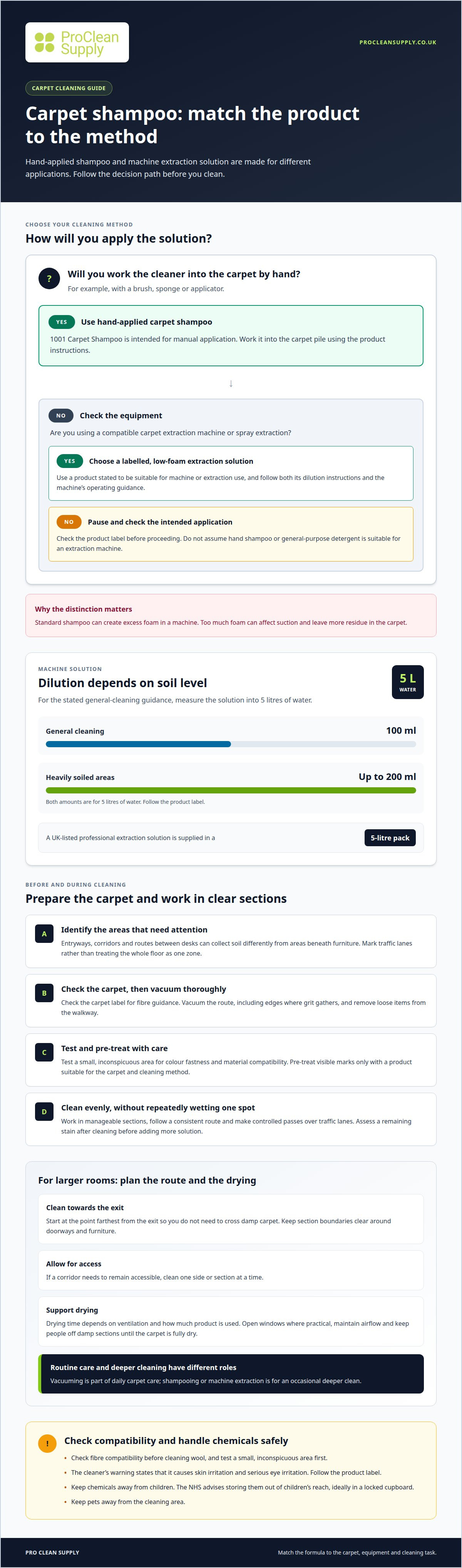
Differences between hand-applied shampoo and machine solution
Hand shampoo and extraction solution serve different application methods. 1001 Carpet Shampoo is formulated for application with a brush, sponge or applicator. Machine solution is intended for a compatible carpet extraction machine, where foam levels can affect extraction.
Low-foam behaviour comes from the product’s formulation, not one ingredient that defines every solution. Ingredients vary, so check the label for the stated application and machine compatibility instead of assuming a particular ingredient makes a shampoo suitable.
Foam matters because excess suds in a carpet cleaning machine can affect suction and leave more residue in the carpet. A standard hand shampoo may therefore be unsuitable for the clean-water tank, even if it works well when applied manually.
Ordinary carpet shampoo or detergent can produce excessive foam in extraction equipment, disrupting suction and cleaning performance. This does not, by itself, mean the machine will be damaged. Use a solution intended for the equipment and follow its operating instructions.
For machine use, a professional carpet extraction solution is listed in a 5-litre size for machines and spray extraction. Its general-cleaning dilution is 100 ml in 5 litres of water. For heavily soiled areas, the recommended amount is up to 200 ml in 5 litres. Measure the product and water carefully, then use the prepared solution as directed.
For hand application, vacuum first, then work shampoo into the pile using small circular motions. Test a small, inconspicuous area for colour fastness and material compatibility before either method. After shampooing, allow the carpet to dry fully before vacuuming. With hand-applied shampoo, remove excess foam with a vacuum, or let it dry before vacuuming away the dry crystals. Choose a formula suited to the method, then follow its dilution and use instructions.
Suitability for wool carpets
Wool carpets need a cleaning product labelled as suitable for wool. A low-foam formula is not automatically wool-safe: foam level describes how a product behaves in a machine, not its compatibility with every carpet. Check the product label and carpet care instructions before choosing hand application or extraction.
Begin with a discreet test area, such as beneath furniture or near an edge. Apply the product as directed, then check the wool for colour change, altered texture or other visible effects. Let the test area dry before judging the result, as damp fibres can look different from dry ones.
For machine cleaning, use a solution explicitly intended for carpet extraction and follow its dilution instructions. Don’t assume hand-applied shampoo can go into the clean-water tank. The wrong formulation can create excess foam, affect suction and leave residue in the pile.
For hand cleaning, use a brush, sponge or applicator only where the product label permits. Work gently over a small section instead of saturating the wool. If a mark needs attention, avoid aggressive scrubbing: friction can disturb the pile and make that area look different.
Before cleaning, vacuum to remove loose grit. Check seams, edges and any care label for fibre or cleaning restrictions. If the carpet combines wool with another fibre, follow the most restrictive care instruction for the blend.
Drying matters. Ventilate the room and let the carpet dry fully before vacuuming or returning furniture. Drying time depends on ventilation and how much product you use. Avoid walking over damp wool, especially along a cleaned traffic route, as this can flatten the pile or transfer soil.
Choose a product suited to both the method and the fibre. For wool, the deciding factors are explicit carpet compatibility, measured dilution and controlled application, not simply whether the solution produces little foam.
Pro Clean Supply: BAC 50 - Benzalkonium Chloride 50% Professional Biocide
BAC 50 - Benzalkonium Chloride 50% Professional Biocide is a biocide, not a carpet shampoo or machine extraction solution. For carpet cleaning, Pro Clean Supply’s Laundry & Carpet Cleaning Chemicals are the relevant product category. Select a carpet product according to its stated use, the cleaning method and carpet fibre; don’t substitute a biocide for a carpet extraction formula.
This distinction matters when building a cleaning product range for a workplace or hospitality setting. BAC 50 serves a different purpose from carpet-care chemicals, while the latter relate directly to carpet cleaning tasks. Keeping product roles clear helps you choose the right type of solution for each job.
For carpet-care products or BAC 50, contact Pro Clean Supply.
Make the next carpet clean a considered choice
Before your next clean, note the carpet fibre, available equipment and areas that need attention. This preparation helps you choose between hand application and extraction, with the product’s intended use in mind. For machine work, select a low foam carpet shampoo for machines that matches the equipment and carpet-care instructions.
For wider workplace cleaning requirements, Pro Clean Supply offers Laundry & Carpet Cleaning Chemicals and Catering & Hospitality Cleaning Products, alongside BAC 50 - Benzalkonium Chloride 50% Professional Biocide. These products serve distinct cleaning needs, so keep carpet care and biocide applications separate when planning your supplies.
Contact Pro Clean Supply for advice on its cleaning product range. Choose the right solution for the task, and approach your next clean with confidence.
Frequently Asked Questions
Which low-foam carpet shampoos are compatible with popular UK carpet cleaner machines?
Choose a low-foam solution labelled for carpet extraction or spray extraction, rather than assuming it suits every machine. A professional extraction cleaner is listed in a 5-litre format for these methods, but compatibility depends on the equipment’s instructions. For example, before filling a machine’s clean-water tank, compare its manual with the product label and use only a solution intended for that cleaning method.
What are the best low-foam carpet shampoos for machines by price and performance in the UK?
The Carpet Extraction Cleaner Low Foam is listed as a 5-litre solution for machines and spray extraction. Compare products by pack size, dilution and soil level; the recommended dilution is 100 ml in 5 litres for general cleaning, or up to 200 ml in 5 litres for heavily soiled areas.
What ingredients make carpet shampoo low-foam, and why does foam matter in a machine?
Ingredients vary between products, and low-foam behaviour comes from the formulation. Excess foam can affect machine suction and leave more residue, so check that the label states the solution is suitable for extraction or machine use.
Where can you buy low-foam carpet shampoo for machines in the UK, and what does it cost?
UK suppliers of professional carpet-cleaning chemicals are the relevant purchasing channel. Compare pack size, stated application and dilution; the material provides no specific cost.
How should carpet be rinsed and dried after using machine shampoo?
Follow the machine and product instructions. Ventilate the room, maintain airflow and keep people off damp carpet until it is fully dry. Drying time depends on ventilation and how much product you use.