

Carpet Extraction Machine Detergent for Commercial Cleaning
Carpet extraction machine detergent should be formulated for machine cleaning and suit the carpet fibre, pile density and type of soiling. Washing-up liquid is not a suitable default: it is not designed to work with an extraction machine’s spray and recovery process. Choose carefully to limit residue and protect the material being cleaned.
It is easy to assume that a familiar household cleaner will work just as well in a carpet cleaner. But carpets, rugs, upholstery, wool and stain-resistant nylon each need specific consideration. When chlorine-based solutions are unsuitable, the NHS lists pH-neutral detergent and warm water, steam cleaning, or a carpet-cleaning machine as alternatives.
This guide explains how extraction cleaning works, what to consider when matching detergent to different materials, and why washing-up liquid may not be suitable. It also covers stains and upholstery, plus how to help the cleaned area dry before it is used again.
Key Takeaways
- Choose a machine-compatible detergent based on the carpet’s fibres, pile density and the type of soiling.
- Washing-up liquid isn’t a reliable substitute for a formulation designed for extraction cleaning.
- Adjust your approach for wool, stain-resistant nylon and upholstery rather than treating every surface alike.
- After cleaning, rinse with clean water and allow the carpet to dry before the area is used again.
Carpet extraction machine solution compatibility
Match the cleaning liquid to both the extraction machine and the carpet. The machine instructions and detergent directions set the correct dilution and application method.
Choosing a Suitable Machine Detergent
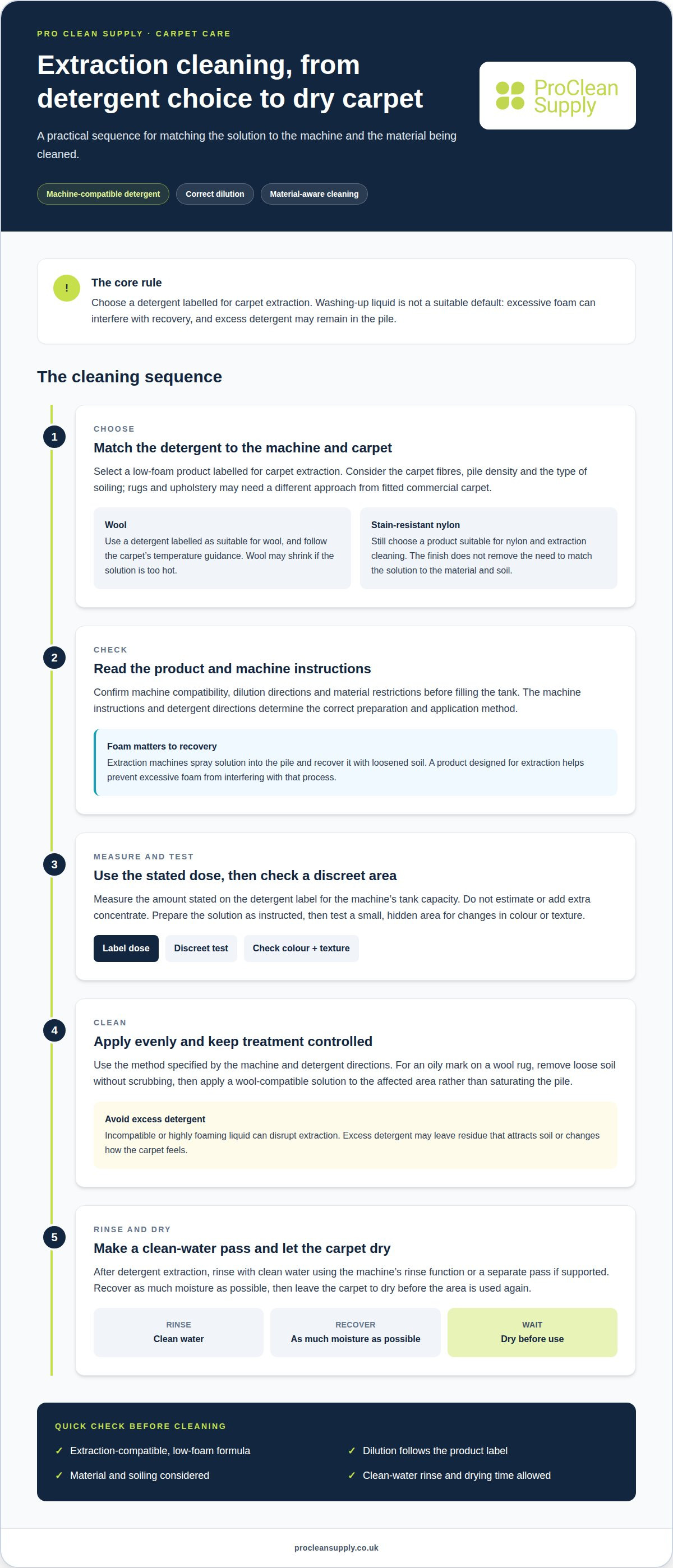
Use a detergent labelled for carpet extraction, not a general-purpose cleaner or washing-up liquid. Extraction machines spray solution into the pile, then recover it with loosened soil. A product designed for this process helps prevent excessive foam from interfering with recovery. Before filling the tank, check the label for machine compatibility, dilution directions and material restrictions.
Using Detergent in the Machine
How much should you use? Measure the dose stated on the detergent label for the machine’s tank capacity. Don’t estimate or add extra concentrate: the correct amount depends on the product and its directions. Prepare the solution as instructed by the machine manufacturer, then apply it evenly. Test a small, discreet area first to check for changes in colour or texture.
Machine Damage and Residue Risks
Can detergent damage a machine or leave residue? Yes. An incompatible or highly foaming liquid can disrupt extraction, while excess detergent may remain in the pile. Residue can attract soil and change how the carpet feels. Use a machine-compatible formula at the stated dilution, and avoid washing-up liquid. Follow any restrictions in the machine instructions before cleaning.
Rinsing After Extraction
Do carpets need rinsing? After detergent extraction, rinse with clean water and let the carpet dry before reopening the area. The NHS recommends rinsing cleaned carpets with clean water and letting them dry before use. Use the machine’s rinse function or make a separate clean-water pass if the machine supports it. Recover as much moisture as possible to help the carpet dry.
Detergents for carpets, rugs, fabrics and upholstery
Choose a formula for the material, pile density and type of soiling, not simply the room. Rugs and upholstery may need a different approach from fitted commercial carpet.
Low-Foam and High-Foam Detergents
What’s the difference? Low-foam detergent produces less suds during machine cleaning; high-foam products create more lather. Extraction machines need a solution they can recover efficiently, so choose a detergent made for extraction. A low-foam formula can help reduce residue and drying time, though results depend on the product and conditions.
Foam alone does not indicate how effectively a product cleans. Check the label for the intended method and compatible machines. Don’t assume that carpet shampoo designed for manual or rotary use belongs in an extraction tank. A product that foams heavily may leave more suds in the pile or recovery system.
Eco-Friendly and Pet-Safe Options
Are eco-friendly or pet-safe options available in the UK? Yes, products are marketed with these descriptions, but the terms don’t replace checking the detergent’s directions and intended use. Read the label for application instructions, ventilation advice and any precautions for people or animals.
“Pet-safe” does not mean a wet carpet is ready for animals straight away. Keep pets away during cleaning and until the treated area is dry, following the product instructions. For an eco-focused choice, review the product’s stated environmental claims and packaging information rather than relying on a green colour or natural-sounding name.
For upholstery, test the solution on a discreet area first, then check the colour and texture after it dries. Use a formula intended for the fabric and extraction method. A sofa, rug and dense commercial carpet can respond differently, even when they appear to have similar fibres. Match the detergent to the item and follow its care directions.
Detergents for wool and stain-resistant nylon
Wool and stain-resistant nylon require different cleaning decisions. Match the detergent to the fibres, pile density and type of soiling, then follow the carpet’s care instructions. A stain-resistant finish does not remove the need to choose a compatible cleaning solution.
Cleaning Wool Fibres
Natural wool fibres may shrink if the cleaning solution is too hot. Use a detergent labelled as suitable for wool and keep the solution temperature within the carpet’s care guidance. Don’t treat wool like synthetic carpet: heat or an unsuitable product can affect the pile. Test a discreet area first and check for changes in colour or texture before cleaning the wider surface.
For an oily mark on a wool rug, first remove loose soil without scrubbing the fibres. Then apply a wool-compatible solution using the extraction method specified on its label. Work carefully on the affected area rather than saturating the pile. This keeps treatment controlled and focused on the stain.
Choosing for Stain-Resistant Nylon
Stain-resistant nylon is still a textile surface, not a reason to use any detergent. Choose a product suitable for nylon and extraction cleaning, taking the type of soiling into account. For example, oily or sticky residue may remain after vacuuming, so a carpet-cleaning solution could be needed to lift it from the pile.
Follow the care label and detergent directions for nylon carpet. Apply the recommended solution to a discreet test area, then inspect the colour and pile after treatment. If the finish or appearance changes, stop before treating the full area. A resistant finish can help with stains, but the material and soiling still determine detergent choice.
What detergent is suitable for a carpet extraction machine?
Choose a low-foam carpet extraction machine detergent labelled for machine use. The right formula depends on the carpet fibres, pile density and soil being removed. Wool, for example, needs different consideration from synthetic commercial carpet. Follow the product directions for dilution and application.
Before filling the tank, compare the detergent label with the machine instructions. Check these points:
- Cleaning method: The label should specify extraction or compatibility with carpet-cleaning machines.
- Surface: Confirm suitability for the carpet material, including wool or stain-resistant nylon.
- Soiling: Match the product to the mark, such as oily or sticky residue.
- Solution preparation: Follow the stated dilution and water-temperature directions.
Low-foam formulas are designed to limit suds during recovery. Some product descriptions also say that low-foam formulations help reduce residue and drying time. Treat these as product-specific claims, not guaranteed results. Washing-up liquid is not a substitute: it is not formulated for extraction machines, and excess foam can interfere with solution recovery.
Test a discreet area before cleaning the full carpet. Apply the prepared solution as directed, then inspect the dried patch for changes in colour or texture. When chlorine-based solutions are unsuitable, the NHS lists pH-neutral detergent and warm water, steam cleaning, or a carpet-cleaning machine as alternatives. Match the method to the surface and task.
For commercial cleaning, select a carpet extraction machine detergent that fits the surface and equipment instructions. Explore carpet detergent options for extraction cleaning.
Pro Clean Supply: BAC 50 - Benzalkonium Chloride 50% Professional Biocide
BAC 50 - Benzalkonium Chloride 50% Professional Biocide is a biocide, not a carpet extraction detergent. Keep these products distinct: select a machine-compatible carpet detergent for carpet cleaning, and use a biocide only for its intended purpose and according to its product directions.
For commercial carpet and laundry requirements, Pro Clean Supply offers Laundry & Carpet Cleaning Chemicals. This product category is relevant when sourcing cleaning chemicals for carpet maintenance. Choose products according to the cleaning task, keeping routine carpet extraction separate from biocidal treatment.
Review the product information to find the category suited to your cleaning requirements. Explore cleaning products on the Pro Clean Supply website.
Build a consistent carpet-cleaning process
Make detergent selection a repeatable part of your commercial cleaning programme. Record the carpet type, chosen product, dilution instructions and cleaning method in your site procedures. Staff can then follow the same process across rooms and shifts instead of making product decisions during a job. Review the procedure whenever flooring or cleaning products change.
As a practical starting point, group areas by their cleaning needs. A wool reception carpet and a stain-resistant nylon corridor may need different products. Clear records help staff identify the right procedure for each area and keep product directions accessible. They also make it easier to spot when a cleaning routine needs updating.
Use those requirements to guide your choice of carpet extraction machine detergent, rather than relying on a one-product-fits-every-surface approach. Pro Clean Supply can help you consider its cleaning-chemical range against your commercial application. Contact Pro Clean Supply for detergent advice and take the next step towards a more consistent cleaning process.
Frequently Asked Questions
Can You Put Washing-Up Liquid in a Carpet Cleaner?
No, washing-up liquid is not designed for carpet extraction machines. Its foaming behaviour can make it unsuitable for equipment that sprays and recovers cleaning solution. For example, using it on a dining-room spill may leave suds in the pile even after the visible mark has lifted. Choose a product labelled for extraction cleaning and follow its directions rather than adapting a household cleaner.
Can You Use Ordinary Detergent in a Carpet Cleaner?
Only if the detergent is specifically suitable for carpet-cleaning machines. Laundry detergent, for example, is formulated for a different textile-washing process, so its foaming and rinsing characteristics may not suit extraction equipment. Check the product label for machine use and carpet-material guidance. A familiar household product is not automatically compatible just because it cleans fabric in another setting.
Is Carpet Cleaning Solution the Same as Carpet Shampoo?
Not necessarily. “Carpet cleaning solution” is a broad description, while “carpet shampoo” can refer to products designed for particular cleaning methods. Shampoo intended for rotary machines or manual application may not be suitable for extraction. Check the label for the stated method rather than relying on the product name. The application method determines whether it belongs in an extraction machine.
Why Does Machine Compatibility Matter?
Compatibility matters because an extraction machine both applies solution and recovers it from the carpet. Unsuitable foam can affect recovery, leaving more moisture or detergent in the pile. For example, a formula designed for another machine type may behave differently in an extractor. Match the product instructions to the equipment instructions before preparing a tank.
Can you use regular carpet shampoo in a carpet extraction machine?
Only if the label says it is suitable for extraction machines. The word “shampoo” alone does not identify the intended equipment or method. A product designed for a single-disc machine, for example, may be used differently from one designed for an extractor. Confirm the machine type and surface guidance on the label, then follow the preparation and use instructions.
Are carpet extraction detergents safe for wool and delicate carpets?
Some detergents are formulated for wool, but suitability depends on the product and the carpet’s care instructions. Wool is a natural fibre, and excessive heat in the solution can cause shrinkage. Check that the detergent is intended for wool, then test a discreet section before cleaning the full carpet. If a delicate rug’s fibre content is uncertain, identify the material before choosing a cleaning method.