

How to Clean Chewing Gum off Pavement: A Practical Guide
A pressure washer may seem like the quickest answer, but too much force can damage paving or drive gum deeper into joints. If you’re working out how to clean chewing gum off pavement, soften the deposit first, then choose a removal method that suits the surface.
Firmly stuck gum can resist ordinary brushing. Applying heat, scraping or using a cleaning product without checking its suitability can leave marks, loosen blocks or discolour paving. The right method depends on the surface, its condition and how much gum needs removing.
This guide explains how to assess paving, compare removal options and work carefully to reduce damage and mess. It also covers when repeated DIY attempts are unlikely to help and it may be sensible to seek professional assistance.
Key Takeaways
- For how to clean chewing gum off pavement, match the removal method to the paving material and condition of the deposit.
- Work methodically: clear and inspect the area, soften the gum, lift it gently, then rinse.
- Compare manual removal, heat-assisted methods and pressure washing before choosing an approach for the size of the job.
- Test discreetly if the paving, joints, sealants or stone composition may be vulnerable to marking or damage.
- Widespread deposits, fragile surfaces or repeated DIY failure may call for professional help. Ask how the surface will be assessed and protected before work begins.
How to Clean Chewing Gum off Pavement Without Damaging the Surface
Start by checking the gum and identifying the paving. Fresh gum may lift with careful manual removal, while a dry, compressed deposit often needs controlled softening first. There’s no single method for every surface: the result depends on how long the gum has been there, the paving’s texture and condition, the weather and the method used.
Modern gum contains a gum base that can include polymers, plasticisers and resins. This overview of the composition of modern chewing gum helps explain why a deposit may cling rather than brush away. On rough or porous paving, residue can settle into small surface irregularities. Several layers can be more difficult to remove than one fresh deposit.
Work gradually. Aggressive scraping can scratch or chip paving, while uncontrolled heat may affect coatings, sealants or nearby materials. Untested chemicals can stain or discolour the surface. If you’re considering a cleaner, check its label and safety data sheet for instructions and surface suitability. Don’t assume a product is appropriate for every type of paving.
Why chewing gum sticks to concrete and paving
Fresh gum is often softer and easier to lift carefully, although pressing or brushing it can spread the deposit. Weather exposure can leave older gum hardened and compressed against the paving. On rough concrete, residue may lodge in the surface grain or small recesses, making ordinary brushing less effective. Several deposits layered together may also need a more controlled approach than one isolated spot.
Check the paving before choosing a cleaning method
First, distinguish between concrete, block paving and natural stone. Look for loose joints, cracks, existing damage, coatings and sealants. These can affect how the surface responds to heat, chemicals or pressure. Take particular care around block-paving joints, and remember that natural stone composition and finish can vary. If you can’t identify a coating or stone type, don’t assume it will tolerate a stronger method.
Test your proposed approach on a discreet area before treating the visible deposit. Check for changes in colour, texture or finish, and stop if the paving reacts unexpectedly. Testing is especially important before applying a cleaning product or using heat or pressure. If the test area is unaffected, proceed with a method suited to the gum and paving rather than increasing force when the first attempt doesn’t work.
How to Remove Chewing Gum from Pavement: A Step-by-Step Method
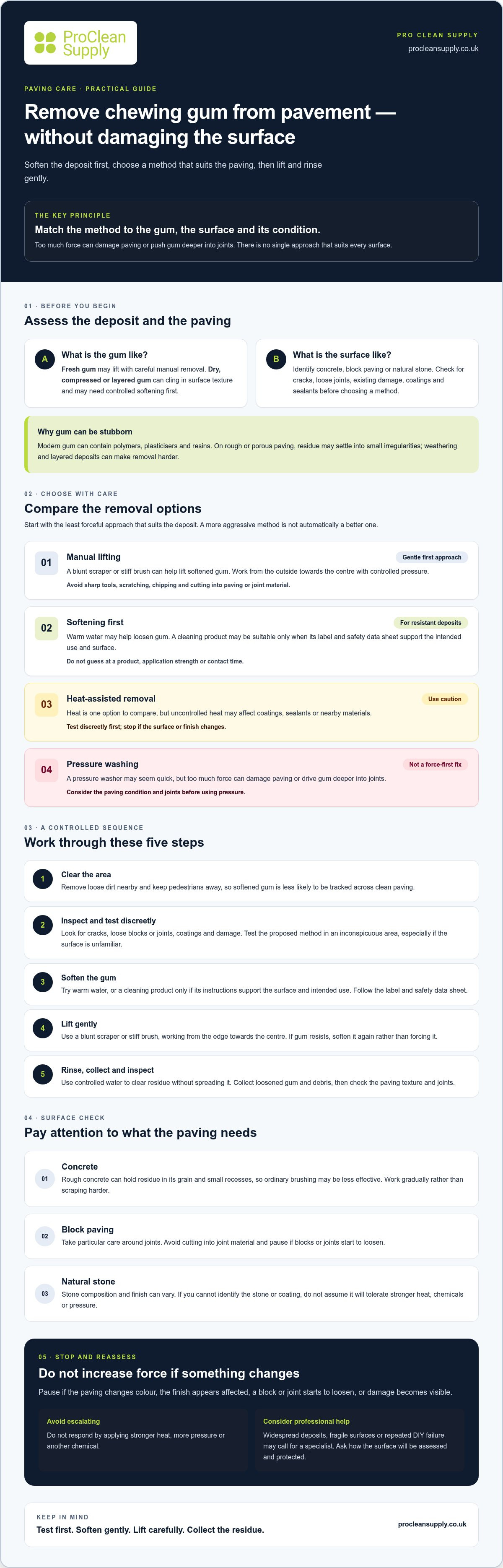
A controlled sequence can help remove gum while limiting the risk of marking paving or spreading residue. When considering how to clean chewing gum off pavement, work gently and stop if the surface changes or becomes unstable. If you use a cleaning product, follow its label and safety data sheet, including the specified protective equipment and handling instructions.
- Clear the area. Remove loose dirt around the deposit and keep pedestrians away while you work. This reduces the chance of softened gum being tracked onto clean paving.
- Inspect the surface. Check for cracks, loose blocks or joints, coatings and existing damage. Test your chosen approach discreetly, especially if you’re unsure about the paving’s finish or condition.
- Soften the gum. Warm water may help loosen a deposit. A cleaning product may also be suitable, but only if its label supports the intended use and surface. Follow the instructions. Don’t guess at a chemical, application strength or contact time.
- Lift it carefully. Use a blunt scraper or stiff brush, applying controlled pressure from the outer edge towards the centre. Avoid sharp tools, and don’t cut into the paving or joint material. If the gum resists, soften it again rather than forcing it.
- Rinse and inspect. Use a controlled amount of water to clear loosened residue without spreading it across clean paving. Collect the gum and debris as you work. The American Chemical Society discusses gum and environmental pollution, reinforcing why residue should be collected rather than dispersed.
Know when to stop
Pause if the paving changes colour, its finish appears affected, a block or joint starts to loosen, or the surface shows damage. Don’t respond by increasing pressure, applying stronger heat or adding another chemical. Reassess the method and surface before deciding whether another cautious attempt is appropriate.
After rinsing, check for gum in the surface texture or joints. Repeat only if the paving appears unaffected, using the same controlled approach. If you’re choosing supplies for the wider job, browse patio and driveway cleaning products, checking each product’s label and safety data sheet before use. A product category alone doesn’t confirm suitability for chewing gum or a particular paving material.
Which Chewing Gum Removal Method Suits Your Pavement?
The best option depends on the gum’s condition, the paving’s strength and the size of the affected area. When deciding how to clean chewing gum off pavement, start with the method that gives you the most control, not the one with the greatest force. Pressure washing can be useful in some situations, but it isn’t automatically the safest or most effective first step.
| Method | Control | Surface-damage risk | Equipment | Best suited to |
|---|---|---|---|---|
| Manual scraping or brushing | High, with a blunt tool and steady pressure | Low when used gently, but scraping can mark paving or disturb joints | Blunt scraper or stiff brush | Small deposits, especially when gum has softened |
| Heat-assisted removal | Moderate; depends on careful, even application | Can be higher if heat is uncontrolled or the surface has a vulnerable finish | Suitable heat equipment used as instructed | Hardened deposits that resist gentle manual removal |
| Pressure washing | Lower at close range or on delicate surfaces | Can affect paving, joints and nearby surfaces if pressure or distance is unsuitable | Pressure washer | Widespread deposits on paving that can tolerate the method |
Manual scraping and brushing versus heat
Manual removal gives you a direct feel for how the paving responds. It’s a controlled choice for a small spot, though hardened gum may take patience. Use a blunt scraper or stiff brush without digging into the surface or joints. Heat can soften a stubborn deposit and make it easier to lift, but excessive or poorly directed heat may affect some paving, coatings or sealants. Follow equipment instructions and test discreetly before proceeding.
When pressure washing is appropriate
Water pressure and nozzle distance both affect the force reaching the surface. Too much force, or working too close, may erode a vulnerable finish, shift joint material or send residue onto surrounding areas. Start conservatively and follow the washer manufacturer’s instructions. If the gum covers a large area, the paving is fragile, or you’re unsure how it will respond, seek a professional assessment rather than increasing pressure.
Consider a cleaning product only when its label supports the intended use and surface. Don’t assume a patio or driveway cleaner, hard surface cleaner or biocide is suitable for chewing gum. Check the label and safety data sheet before use, and don’t apply BAC 50 or another biocide without verified suitability. Choose according to the product’s stated purpose, not simply its strength.
Adjust the Gum-Cleaning Method for Concrete, Block Paving, and Stone
The same method can behave differently on different paving. Before treating a deposit, consider the material, its condition and any applied finish. If you’re deciding how to clean chewing gum off pavement, match the method to the surface. A cleaner or amount of pressure that suits one paving type may not be suitable for another.
- Sound concrete: Check the texture and condition first. Gum may lodge in a rough or porous finish, while a coating or sealant may respond differently to heat, pressure or cleaning products. Test the proposed method in a discreet spot and check for changes before treating the visible deposit.
- Block paving: Take care around joints. Forceful scraping or washing may displace jointing sand, and water can push loosened residue into gaps. Work over the deposit with controlled pressure, direct rinse water away from joints where practical, then inspect the blocks and jointing before deciding whether another pass is appropriate.
- Natural stone: Identify the stone where possible and check the supplier’s care guidance before choosing a cleaner or removal method. Stone composition and finish vary, so don’t assume that heat, pressure or a product suitable for one type will suit another.
Check finishes and joints before repeating treatment
Coated, sealed, cracked or weathered paving needs extra care. If you’re uncertain about the finish, stone type or stability of the joints, test discreetly and reassess after rinsing. Stop if the surface changes colour, feels rougher, sheds material or starts to loosen. A mark that remains after the gum is lifted may be residue or a change in the paving itself. Stronger treatment could make it worse, and complete stain removal can’t be assumed.
For block paving, check whether residue remains on the surface or has settled between blocks. Avoid digging into joints to chase a small mark. On concrete or stone, compare the treated test area with nearby paving once it has dried, as a wet surface can make changes harder to judge. If the finish looks affected or you can’t identify the material, seek advice before trying another method.
If you need cleaning supplies for a paving project, browse patio and driveway cleaning solutions. Check the product label and safety data sheet for intended use and surface compatibility before application. The product category alone doesn’t confirm suitability for chewing gum or a specific material.
When to Call a Gum-Removal Specialist and Choose Cleaning Supplies
DIY removal may suit a small, accessible deposit on sound paving. Consider a specialist if gum is widespread, careful attempts haven’t worked, the paving is fragile or unfamiliar, or the affected area is large and public-facing. Specialist equipment and experience may help with a bigger job, but the method still needs to suit the surface. Ask for an assessment before work starts if the paving is delicate, coated or difficult to identify.
DIY removal or professional cleaning?
Before appointing a contractor, clarify how they’ll approach the work and protect the surrounding area. Useful questions include:
- How will you identify the paving material and check its condition?
- What removal method do you propose, and why is it appropriate for this surface?
- How will you protect joints, coatings, nearby materials and pedestrians?
- How will loosened gum, wash water and other waste be collected and handled?
- Can you explain what you’ll do if the surface reacts or marks during treatment?
Look for clear answers rather than a blanket promise that one method works on every surface. Agree the proposed approach before work begins, and ask what result is realistic. Don’t assume any cleaning method will remove every remaining mark without affecting the paving.
Select a pavement cleaner responsibly
For a DIY job, assess any product against the task and surface. Check its label and safety data sheet for:
- Intended use: Does the product state that it is suitable for the type of deposit you’re treating?
- Compatible surfaces: Is your specific paving material and finish included?
- Application instructions: Are the stated method and directions practical for the area?
- Protection: What protective equipment and handling precautions are specified?
Don’t mix cleaning products or exceed label instructions. If the label doesn’t confirm suitability for chewing gum and your paving, don’t guess. Patio and driveway cleaning solutions, hard surface cleaners and degreasers are product categories, not proof that a particular formulation will remove gum safely. Pro Clean Supply sells cleaning supplies online, but doesn’t provide cleaning services. To compare options, explore patio and driveway cleaning supplies and check each product’s instructions before use.
Choose a Careful Approach for Cleaner Paving
The safest way to remove gum starts with the surface, not the strongest tool. Identify whether you’re treating concrete, block paving or stone, then choose a controlled method suited to the deposit. Softening hardened gum before lifting it gently can limit unnecessary scraping and pressure.
When deciding how to clean chewing gum off pavement, inspect the result as you go. Stop if the paving changes colour, loosens or shows damage. Widespread deposits, vulnerable surfaces or repeated unsuccessful attempts are good reasons to seek professional advice rather than intensify treatment.
If you’re considering a cleaning product, check its label and safety data sheet for intended use, compatible surfaces and precautions. Explore patio and driveway cleaning supplies as you compare options, but don’t assume a product is suitable for chewing gum or your paving unless its instructions confirm it. Choose a product for the task only when its stated use and surface guidance fit. With a measured approach, you can make an informed decision while protecting the surface.
Frequently Asked Questions
What is the easiest way to remove chewing gum from pavement?
For a small deposit, a practical starting point is to soften the gum and lift it gently with a blunt scraper. First identify the paving material and check its condition, including any coating or loose joints. Warm water may help with a fresh or hardened deposit. Avoid forceful scraping, and test your approach discreetly before treating a visible area.
Can boiling water remove chewing gum from paving?
Boiling water may soften gum, but it isn’t risk-free. It can cause scalding and may affect some paving finishes, sealants or nearby materials. Avoid pouring it onto an unknown or fragile surface. Consider warm water instead, test discreetly and apply it in a controlled way. If the paving changes colour, loosens or shows damage, stop and reassess rather than applying more heat.
Can a pressure washer remove chewing gum from concrete?
A pressure washer can help remove gum from sound concrete, but the result depends on the surface and how the machine is used. Excessive pressure or working too close may mark paving or drive residue into textured areas. Follow the washer manufacturer’s instructions and start conservatively in an inconspicuous spot. For fragile, coated or damaged concrete, consider a gentler method or seek professional advice.
Will scraping chewing gum damage block paving or natural stone?
It can, particularly if you use a sharp tool or force the gum before softening it. On block paving, scraping may disturb jointing sand; on natural stone, a tool can scratch or chip some finishes. Use a blunt scraper with controlled pressure, working from the deposit’s edge. Test discreetly first and stop if the paving or joints shift, mark or loosen.
What cleaner removes chewing gum from pavement?
There isn’t one cleaner that can be assumed suitable for every gum deposit or paving material. Check the product label and safety data sheet for its intended use, compatible surfaces, application directions and protective equipment. Don’t mix products or exceed label instructions. Patio and driveway cleaning products are a category, not confirmation that a particular formulation removes gum safely. Test discreetly if the product’s stated use confirms suitability.
How do you remove old, hardened chewing gum from paving?
Soften hardened gum before trying to lift it. Warm water or a product whose label confirms suitability may help. Use a blunt scraper or stiff brush with controlled pressure, working from the edge towards the centre. Don’t dig into the paving or joints. Rinse carefully, inspect the surface and repeat only if it remains unaffected. Stop if the finish changes or damage appears.
When should I hire a professional to remove chewing gum from pavement?
Consider professional help if deposits cover a large area, repeated careful attempts have failed, or the paving is fragile, coated or unfamiliar. A large public-facing area may also need a more controlled plan. Ask the contractor how they’ll assess the surface, which method they propose, how they’ll protect joints and surroundings, and how they’ll handle residue and wash water. Don’t assume a particular outcome or guarantee.