

Hotel Housekeeping Cleaning Supplies List: 2026 Checklist
A well-stocked housekeeping trolley is built around the room, not a generic catalogue. The right hotel housekeeping cleaning supplies list follows each room-turnover task, helping staff avoid trips back to the store and making replenishment consistent across the team.
Core products and tools should be ready to hand, but quantities need to reflect room type, occupancy and the day’s workload. A repeatable checklist helps staff maintain that standard without overloading trolleys or tying up stock unnecessarily. It also gives everyone a shared reference point at the start and end of each shift.
This practical 2026 checklist groups supplies by task, from bathroom and bedroom cleaning to linen, waste and personal protection. It covers trolley setup, replenishment and safe product organisation, including following label directions and keeping relevant safety information accessible. Use it to set a baseline, then adjust stock levels to your property’s room demand. Hospitality cleaning products, disinfectants, sanitisers, hard-surface cleaners and laundry chemicals can support specific tasks when selected and used as directed.
Key Takeaways
- Build your hotel housekeeping cleaning supplies list around room-turnover tasks, separating daily trolley essentials from store-room stock and specialist-use items.
- Match cleaner categories, cloths and tools to bathrooms, touchpoints, glass, general surfaces and floors.
- Keep cleaning materials separate from linen-handling items and guest-room replenishment, then adapt quantities to each room type and service standard.
- Use occupancy patterns and recorded consumption to set practical stock levels and guide a consistent replenishment routine.
- Turn the master checklist into a property-ready process, with clear steps for trolley setup, room tasks and end-of-shift restocking.
Hotel housekeeping cleaning supplies list: the core essentials
Start with the work: cleaning surfaces, managing used linen, protecting staff and preparing each room for its next guest. Your hotel housekeeping cleaning supplies list should distinguish items for every daily trolley from reserve stock and products used only for specific rooms or tasks.
Use this as a working baseline, then adapt it to your property:
- Chemicals: Hard-surface cleaners, disinfectants or sanitisers suited to the task, plus any specialist products required by your cleaning procedure. Follow each product’s label directions.
- Tools: Clean cloths, non-scratch pads, a toilet brush, a mop or other floor-cleaning tools, and a dustpan and brush where needed.
- PPE: Gloves and any other protective items specified by product instructions or workplace procedures.
- Waste and linen handling: Waste bags, a designated container or bag for used linen, and clean replacement linen as required.
- Guest-room replenishment: Toiletries, tissues, bags and other guest-facing consumables included in your room standard.
A housekeeping checklist is a task-led stock plan, not a fixed catalogue for every property. It equips staff for the rooms they service and helps keep the operational list relevant, whilst reflecting the range of institutional housekeeping tasks described in Housekeeping practices and history.
What belongs on a standard housekeeping trolley?
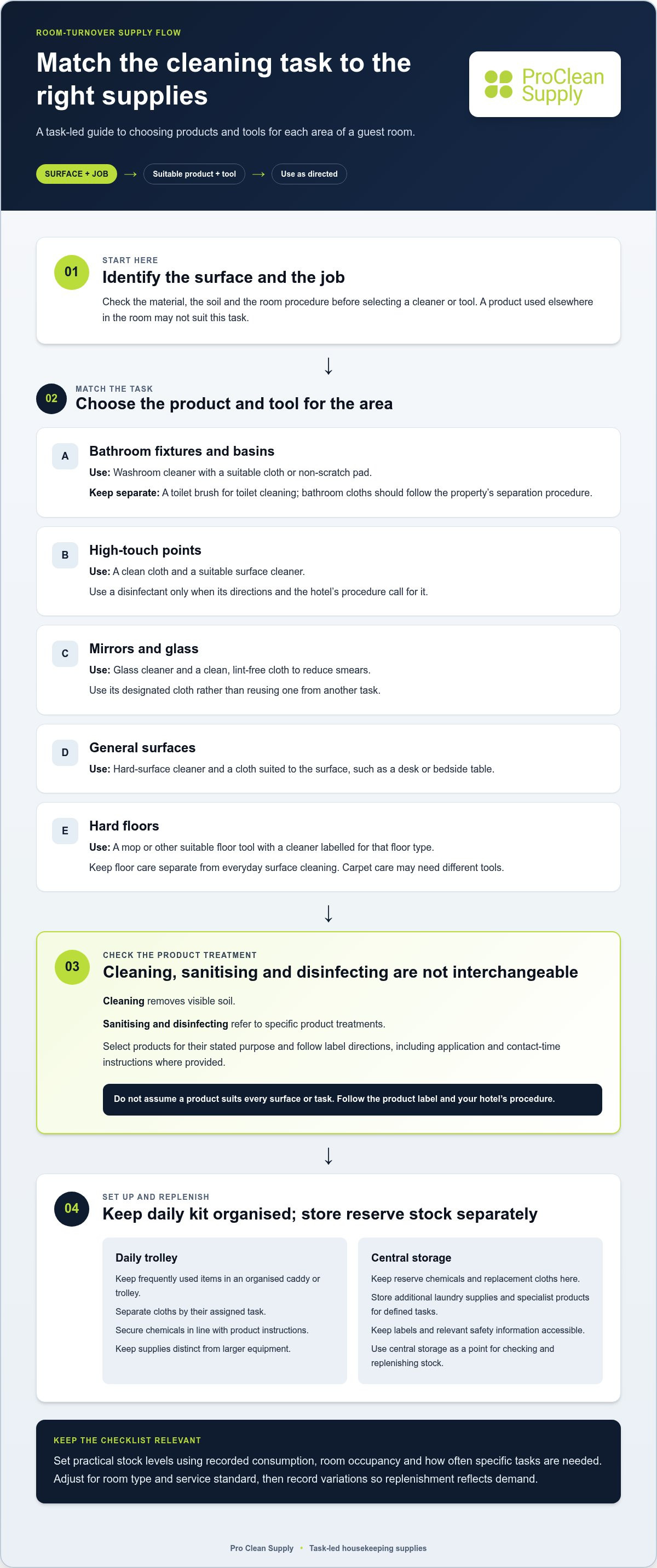
Keep frequently used items in an organised caddy or trolley layout. Separate cloths by their assigned task, and secure chemicals in line with product instructions. Staff should be able to identify and reach the right supplies without unpacking the trolley. The load depends on room mix, surfaces, occupancy and cleaning procedures: a compact room and a family room may need different replenishment.
Keep supplies distinct from equipment. Cloths, cleaning products, gloves and waste bags are supplies. A vacuum cleaner, trolley, floor machine or other larger device is equipment. Equipment may be assigned to a floor or shared between staff, so it does not need to be counted as a consumable for every trolley.
What should be stored separately from daily-use kit?
Use central storage for reserve chemicals, replacement cloths, additional laundry supplies and specialist products needed only for defined tasks, such as carpet care. This keeps trolleys clear and gives supervisors a central point for checking and replenishing stock. Organise products so that labels and relevant safety information remain accessible to staff.
Avoid setting quantities without reference to actual use. Review consumption, room occupancy and the frequency of specific tasks to establish workable stock levels. Room type and service standard matter too: a room with additional beds needs different linen preparation, whilst a longer-stay room may require a different replenishment routine. Record these variations so the checklist stays aligned with demand.
Match hotel cleaning products and tools to each room-cleaning task
A task-based selection helps staff avoid using a general-purpose product where a surface needs a different method. The right choice depends on the surface and the job, so match the cleaner and tool to the material, soil and room procedure before adding them to the hotel housekeeping cleaning supplies list.
Use this task-to-supply guide as a starting point. Product directions and your hotel’s procedures determine the final choice.
- Bathroom fixtures and basins: Washroom cleaner with a suitable cloth or non-scratch pad, and a separate toilet brush for the toilet.
- High-touch points: A clean cloth and suitable surface cleaner. Use a disinfectant only when its directions and the hotel’s procedure call for it.
- Mirrors and glass: Glass cleaner and a clean, lint-free cloth to reduce smears.
- General surfaces: Hard-surface cleaner and a cloth suited to the surface, such as a desk or bedside table.
- Hard floors: A mop or other suitable floor tool with a cleaner labelled for that floor type.
Keep cleaning, sanitising and disinfecting distinct in staff instructions. Cleaning removes visible soil; sanitising and disinfecting refer to specific product treatments, not interchangeable names for routine cleaning. Select products for their stated purpose and use them as directed, including any instructions about application and contact time. Do not assume a product suits every surface or task simply because it is used elsewhere in the room.
Bathroom, touchpoint and glass-cleaning supplies
Assign tools to defined tasks. A toilet brush is for toilet cleaning, whilst cloths for basins, taps and other bathroom surfaces should follow the property’s separation procedure. Use glass cleaner and its designated cloth on mirrors rather than reusing a cloth from another task. Waste liners are useful during bathroom servicing, but choose a size and type that fit the room’s bins. Include disinfectants in the routine only where product directions and hotel procedures call for them.
Floor, carpet and general-surface supplies
Keep floor care separate from everyday surface cleaning. A mop or floor tool is for hard floors; carpet care may need different tools and laundry or carpet-cleaning chemicals chosen for that task. For desks, shelves and other hard surfaces, choose a suitable hard-surface cleaner. A degreaser may suit a particular soiled surface, but it is not a default room cleaner. Check label directions for the intended surface and use before selecting a chemical.
Make these pairings clear on trolley labels or task sheets so staff can identify the right kit quickly. For relevant hospitality cleaning products, choose by task and follow each product’s label directions.
Compare guest-room, washroom and linen supplies without overloading the trolley
Room turnover involves more than cleaning products. Staff also handle linen changes and guest-facing replenishment, which need separate checks and stock routes. Keep these categories distinct in the hotel housekeeping cleaning supplies list so chemicals are not mixed up with room consumables and each item has a clear replenishment owner.
This comparison separates the main groups. Use the examples as prompts, then align them with your property’s room standards.
| Supply group | Examples | Checklist focus |
|---|---|---|
| Cleaning supplies | Washroom and surface cleaners, cloths, gloves, waste liners | Record the cleaning task and surface; replenish from housekeeping stock. |
| Linen handling | Clean bedding and towels, bags for used linen, handling supplies required by procedure | Prepare the correct room set and move used linen through the hotel’s established process. |
| Guest-room replenishment | Tissues, bin liners and property-selected guest consumables | Check each item against the room standard and refill only where required. |
| Washroom replenishment | Toilet paper, hand-washing consumables and any property-selected washroom items | Check dispensers and supplies separately from bathroom surface cleaning. |
Room type and service standard determine what staff prepare. A room with more beds may need a different linen set from a single-occupancy room; a room with additional washroom facilities may have more replenishment points to check. Specify these variations on the checklist rather than imposing one universal quantity. Set expected room contents from your own standard, then adjust preparation to occupancy and the service being delivered.
Linen handling and room presentation
Keep clean linen separate from used linen throughout the reset. Prepare the bedding and towels required for the room, along with the bags or other handling supplies specified by the hotel’s procedure. Linen is a room-presentation item, not a cleaning chemical, so give it a separate checklist line and stock location. A consistent sequence, such as removing used linen before placing the clean set, helps staff complete the change without overlooking a bed or towel.
Guest-room and washroom replenishment
List guest consumables by location: bedroom items such as tissues and bin liners, then washroom items such as toilet paper and other property-selected refills. Keep these checks separate from surface-cleaning tasks. Staff can clean the bathroom, then verify its consumables against the room standard. A refill is not proof that cleaning is complete, and separate checks make shortages easier to record and direct to the right stock area.
Use room-type variations only where they reflect a real difference in layout or service. Keep the core checklist stable, with clear prompts for rooms that need a different linen set or replenishment pattern. This keeps the trolley focused on the rooms being serviced whilst supporting a consistent presentation standard.
Build a safer hotel housekeeping stock and replenishment routine
Consistent stock control helps teams prepare for room demand without filling trolleys with unnecessary supplies. It also makes low stock, missing labels and products needing attention easier to spot. A reliable system combines clear labels, assigned storage and practical staff guidance.
Use this routine to connect daily checks with longer-term stock decisions:
- Review demand. Check expected occupancy, room types and changes to the cleaning schedule. Use these details to plan supplies for the shift.
- Check stock. Assign responsibility for trolley checks and store-room counts. Record usable stock and items approaching the property’s agreed minimum level.
- Replenish. Restock trolleys from the designated storage area, keeping products in their assigned locations and following product instructions.
- Record issues. Note low or missing items, damaged containers and unexpected usage. Pass the information to the person responsible for ordering or stock control.
- Review usage. Compare recorded consumption with room demand and tasks completed. Adjust property-specific stock levels when patterns change.
Set par levels from your own occupancy patterns and observed consumption, not assumed industry averages. Track products by task where practical. For example, recording a product used for defined room-cleaning work separately can help distinguish normal demand from an unusual increase. Review the hotel housekeeping cleaning supplies list when room standards, occupancy patterns or cleaning procedures change.
How to audit housekeeping supplies and set reorder levels
Make ownership explicit: identify who checks each trolley, who counts store-room stock and who reports shortages. Set minimum and maximum levels using actual use over time, then review them when room demand changes. A short stock record can capture the product, task, quantity issued and any issue noted. This gives managers a practical basis for adjusting replenishment without overfilling storage or trolleys.
How to organise chemicals and staff protection
Use product labels, workplace procedures and current COSHH risk assessments to guide chemical handling, dilution, storage and the selection of task-appropriate gloves or other PPE. Keep products in their labelled containers and store them as directed. Make relevant safety information accessible, and ensure guidance reflects the products and tasks staff actually use. Do not rely on memory when instructions and procedures are available.
Keep the stock record alongside the checklist and review both after operational changes. Relevant hospitality cleaning products, including cleaners and disinfectants, can be selected for the task and managed through the same labelled stock process.
Turn the hotel housekeeping cleaning supplies list into a property-ready checklist
A master list becomes useful when staff can apply it to the rooms and service standards they are responsible for. Adapt the hotel housekeeping cleaning supplies list by room type, cleaning frequency and assigned role. Keep the daily checklist focused on items staff need to prepare or verify, and manage store-room inventory separately.
For example, a room with a different bed configuration may need a distinct linen prompt, whilst a room serviced less frequently may follow another replenishment routine. Note which tasks belong to room attendants and which stock checks sit with a supervisor or store-room lead. This keeps responsibilities visible without adding every reserve item to the trolley sheet.
Create a printable checklist staff can use consistently
Use tick boxes for readiness and completion, with fields for the date, staff initials, room type and stock issues. Keep prompts short and specific, then maintain a separate inventory for reserve stock and reorder checks.
- Trolley setup: [ ] Cleaning products and task supplies ready; [ ] required PPE available.
- Room tasks: [ ] Supplies matched to assigned tasks and surfaces; [ ] used linen handled according to procedure.
- Replenishment: [ ] Guest-room and washroom items checked against the room standard.
- End-of-shift restocking: [ ] Trolley reset; [ ] shortages and stock issues recorded.
Add a room-type field or a short variation prompt where the standard changes. Avoid fixed quantities on every line unless they reflect your property’s actual room specification.
Replenish professional cleaning products by category
Connect each chemical category to the job it supports. Hospitality cleaning products can cover routine guest-room and washroom tasks; use disinfectants and sanitisers according to product directions and hotel procedures. Degreasers and hard-surface cleaners suit relevant tasks and surfaces, whilst laundry and carpet-care chemicals belong with their corresponding care processes. No category should be treated as suitable for every surface.
Review the checklist when room standards, cleaning frequency or staff responsibilities change. A clear task description helps the person replenishing stock choose the relevant category and follow product label directions. Keep the printable room sheet concise, and use the separate inventory to monitor chemical stock, usage and replenishment needs.
For relevant hospitality and professional cleaning products, explore professional cleaning supplies, with online purchasing and bulk-buying options available.
Put your checklist into operation
Start with a working version of your hotel housekeeping cleaning supplies list and use it during a real shift. Ask staff to note which items run short, remain unused or are difficult to access. These observations can show where the checklist needs a room-specific prompt, clearer ownership or an adjustment to replenishment levels.
Set a review point after the team has used the checklist across its normal room mix. Keep changes that make preparation more consistent, and remove prompts that do not support the property’s actual procedures. A checklist should keep pace with operating practice rather than be treated as a document that is finished once printed.
Pro Clean Supply stocks cleaning chemicals and professional supplies for room-turnover routines. Shop professional cleaning supplies online and choose products by task, following each product’s label directions.
Frequently Asked Questions
What should be on a hotel housekeeping trolley?
A hotel housekeeping trolley should carry supplies for the rooms and tasks assigned that shift, rather than every item held in the store room. This may include cloths, gloves, waste bags, a caddy and task-appropriate cleaning products, with washroom or floor-care items added as required. Keep guest consumables and clean linen in separate sections where practical, so staff can locate them without mixing them with chemical stock.
How often should hotel housekeeping supplies be checked?
Check trolley contents before each shift or room assignment, then replenish after use according to the hotel’s procedure. A store-room review can follow a scheduled cycle, with more frequent checks for heavily used products or items with limited storage life. Record shortages and consumption as they occur. Managers can use these records to adjust reorder levels to the property’s actual pattern instead of relying on estimates alone.
How should hotels store cleaning chemicals?
Follow the product label, the workplace’s current COSHH risk assessment and the hotel’s storage procedure. Keep chemicals in their labelled containers, and store or separate them as directed by their safety information. Where the procedure requires restricted access, make that clear to the team. Staff should know where handling guidance is kept and which protective equipment applies to each task. Revisit the arrangements if products or procedures change.
What PPE do hotel housekeepers need for cleaning?
PPE depends on the task, product instructions and workplace risk assessment. Gloves may be appropriate for some cleaning work, but do not assume one type of glove or protective kit suits every chemical. Include specified items in task instructions and show staff how to use them as directed. The protection selected for handling one product may differ from what is needed for another room task.
Should every hotel room have the same housekeeping supplies list?
Use a consistent core standard, then add prompts for differences in room layout, facilities, service level and scheduled work. A room with extensive carpet may need a different task assignment from one with mostly hard flooring; a room with extra washroom facilities may need additional checks. Make variations explicit on the room sheet so staff can prepare appropriately without carrying every possible supply to every room.
How can a hotel reduce missing items during room turnover?
Use linked checks before the shift, during room servicing and after the work is complete. Keep frequently used supplies in consistent trolley locations, and give staff a simple way to record what was missing and where. Review recurring reports alongside restocking records. If the same item is repeatedly overlooked, the cause may be an unclear checklist prompt, an unsuitable trolley layout or a replenishment step that needs assigning to a named role.